
Berkeley County assessor presents multiple tax exonerations, a commercial correction and one parcel consolidation
Get AI-powered insights, summaries, and transcripts
Subscribe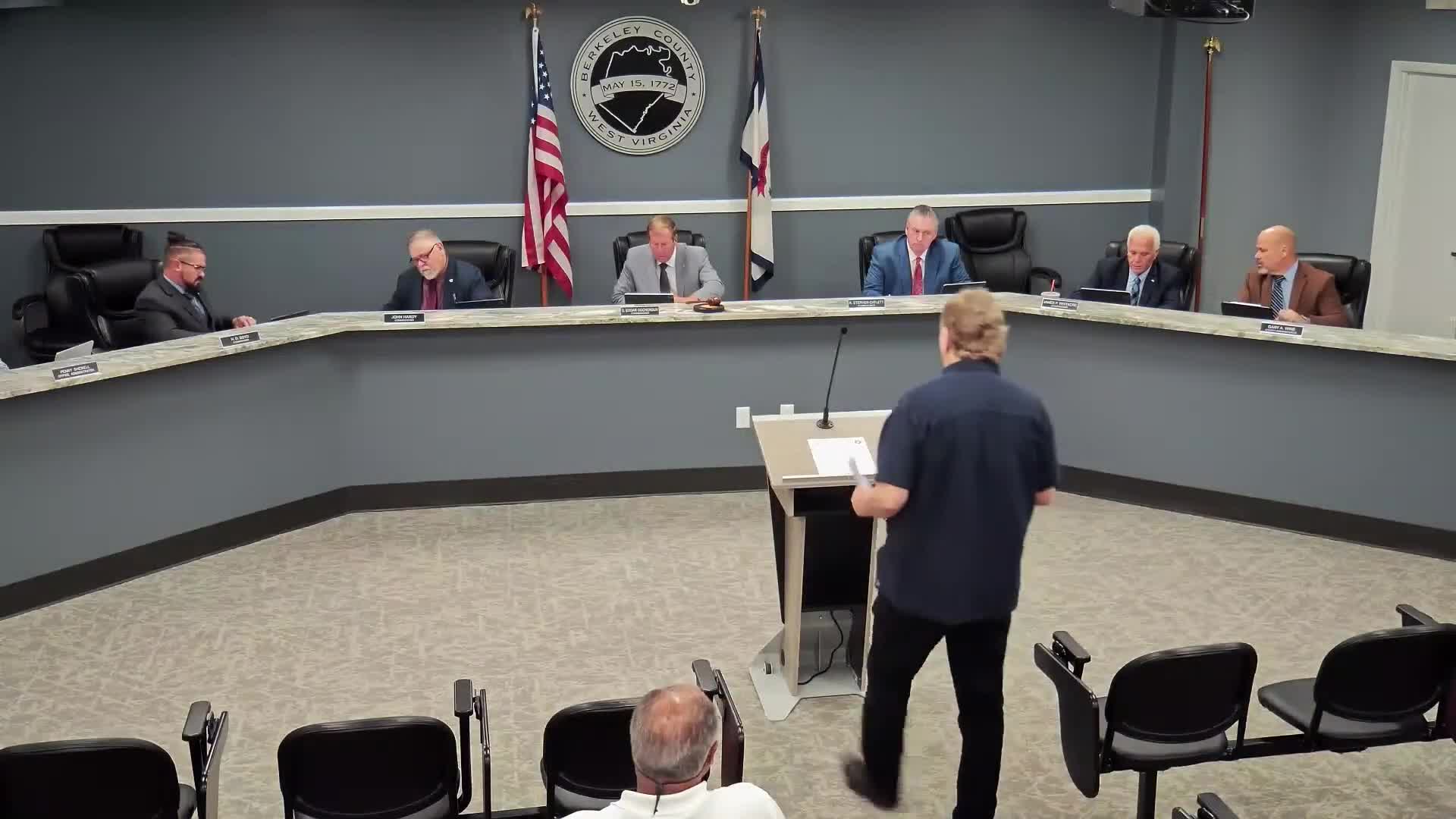
Summary
Assessor Larry Hess asked the commission to approve a package of personal-property and real-estate tax exonerations, described a large correction to commercial assessments caused by duplicated entries, and requested approval to consolidate two parcels into a single tax bill for one owner.
Larry Hess, Berkeley County assessor, told the county commission on Sept. 18 that he was presenting several tax exonerations, a large commercial correction and one request to consolidate two parcels for a single tax bill. He asked commissioners to approve the exonerations and the consolidation during the assessor's report. Hess said two personal-property tax exonerations for taxpayer error totaled $755.52, and he requested approval. He later summarized five other personal-property exonerations totaling $15,915.94, noting that $13,740 of that sum came from a duplicate entry from the state tax department that was added twice. Hess said he would contact the state tax department to try to prevent the repeated charge. Hess described a separate real-estate correction for the Mulberry Development (Mulberry Mall) that arose from how commercial parcels with multiple, identical units are entered into the assessor’s system. He said one building had been recorded twice when similar-unit fields were misapplied, producing a substantial overcharge that he presented for correction. For the two city real-estate exonerations he described, he said the total reduction was $71,030.48. Hess also requested commission approval to consolidate two parcels belonging to Michael Hessler so the owner would receive a single tax bill. He made the procedural motion and the commission moved and seconded approval of the consolidation and the exonerations as presented. The motions to approve the exonerations and the parcel consolidation were moved, seconded and called for the vote during the meeting; the clerk recorded the motions as carried. The assessor said he will produce a year-end report on commercial cards that have multiple identical-unit entries so the county can approve corrections in bulk if similar errors appear. The discussion portion of the assessor's remarks included procedural questions from commissioners about how state-collected industrial and business personal-property items are corrected; Hess said the county must coordinate with the state tax department for those items because the county cannot directly remove their entries.