
Industry leaders urge $10 billion federal push to build U.S. fusion demonstration plants
Get AI-powered insights, summaries, and transcripts
Subscribe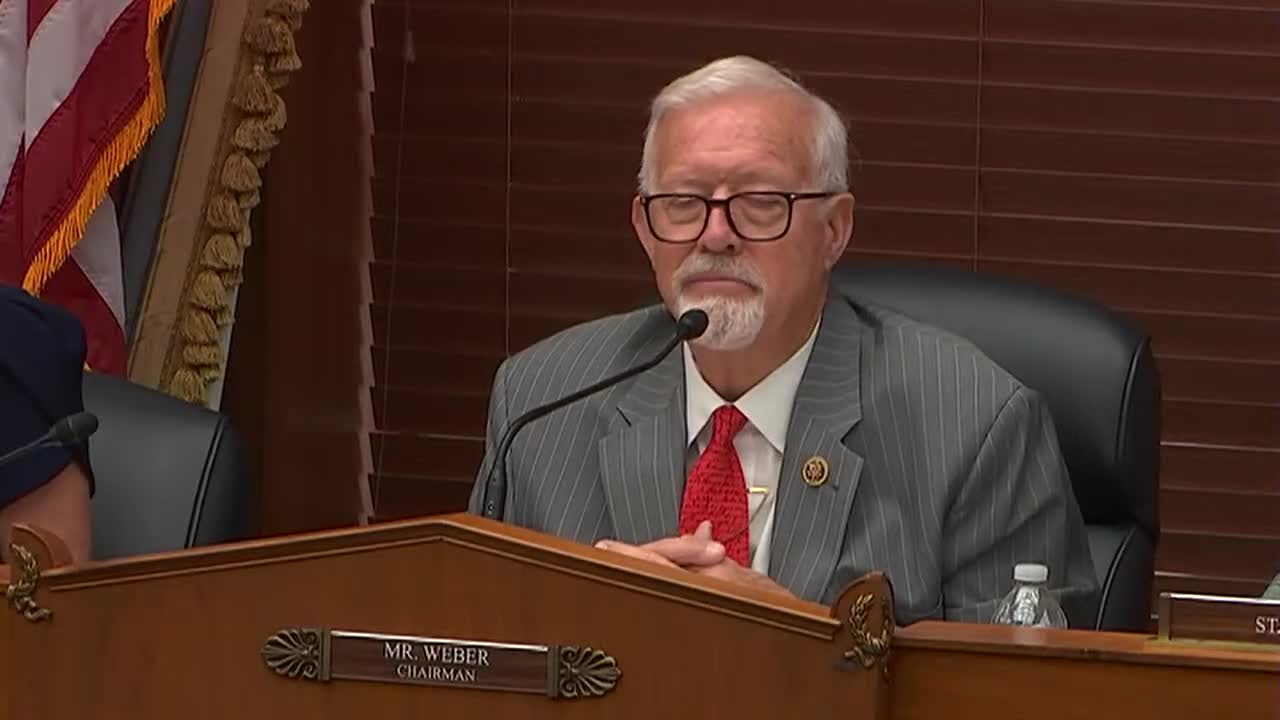
Summary
Witnesses at a House Science Subcommittee hearing urged Congress to fund a one‑time, large federal investment to accelerate commercialization of fusion power, citing rapid private investment, U.S. national security concerns, and Chinese facility build‑outs.
At a House Science Subcommittee on Energy hearing, fusion industry leaders and national lab officials onlined a shared request: Congress should fund a large, accelerated federal program to move fusion from laboratory demonstrations to ground‑breaking commercial plants. "The US is not positioned to win. China is," said Bob Mumgaard, cofounder and CEO of Commonwealth Fusion Systems. "We're at serious risk of falling behind unless it takes urgent action and soon."
The request centered on a one‑time federal investment of roughly $10 billion to fund milestone‑based public‑private programs and to finance prototype or demonstration fusion plants. "We are calling the US government to do a one time $10,000,000,000 investment in fusion research and demonstration," Mumgaard told the subcommittee. Will Regan, president and cofounder of Pacific Fusion, urged Congress to accelerate construction timelines and said, "America needs to build fusion power plants before China with shovels in the ground as early as 2028."
Why it matters: witnesses said a scaled, milestone‑based program would reduce risk, attract private capital, and create the industrial activity and supply chains required to deploy pilot plants. Mumgaard and others said China has been rapidly building facilities and investing at scale, and that a matched U.S. commitment would protect industrial leadership and standards. "If we spend that money now, we won't have to spend 10x of that money later to catch up," Mumgaard said.
Supporting details: witnesses pointed to existing DOE tools and pilots — the DOE milestone program, INFUSE public‑private partnerships, and ARPA‑E awards — as models that could be expanded under a larger demonstration program. Mumgaard suggested that funds be used both to scale the DOE milestone program so winning companies can reach construction readiness and to fund direct construction of a small number of first‑of‑a‑kind plants. Troy Carter, director of the Fusion Energy Division at Oak Ridge National Laboratory, said new national facilities and test stands outlined in community roadmaps (materials test stands, blanket and fuel‑cycle facilities) are a necessary complement to a demonstration program.
Discussion, not decision: the hearing recorded advocacy and technical detail but no formal congressional vote or directive. Committee members asked how a $10 billion injection would be allocated and how it would interact with annual appropriations; witnesses described priority areas (demonstration projects, materials and test stands, workforce programs) but did not present a formal appropriation bill under committee consideration.
Context and next steps: witnesses urged Congress to pair a demonstration investment with applied R&D at national labs and universities and with supply‑chain and workforce programs to convert pilot projects into enduring industry capacity. Several members signaled bipartisan interest; witnesses said that a milestone‑based, accountable program modeled on other successful public‑private partnerships could accelerate U.S. deployment while leveraging private capital. No formal action was taken at the hearing.