
Witnesses press for new materials and test facilities to derisk path to fusion pilot plants
Get AI-powered insights, summaries, and transcripts
Subscribe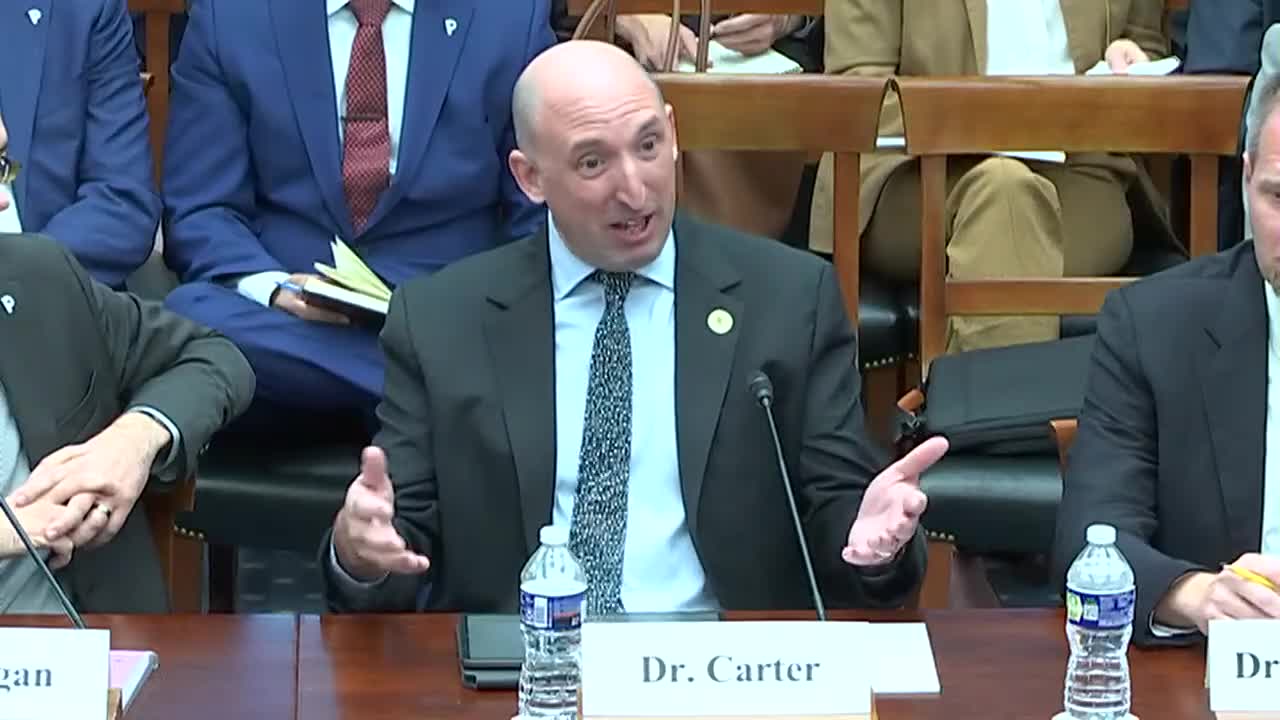
Summary
National‑lab and academic witnesses told the subcommittee that specialized test stands — including a prototypic neutron source, materials exposure facilities, and blanket/fuel‑cycle testbeds — are needed to qualify components and close scientific gaps before commercial fusion plants can be built.
Scientists and national‑lab officials told the House Science Subcommittee that specific, purpose‑built facilities are a prerequisite to move fusion from pilot prototypes to reliable power plants. "We need new facilities," said Troy Carter, director of the Fusion Energy Division at Oak Ridge National Laboratory. Carter described facilities called out in community roadmaps — a fusion prototypic neutron source, a materials plasma exposure experiment, and a blanket/fuel‑cycle facility — as essential to qualify materials and close engineering gaps.
Carter said those facilities are being built abroad and emphasized urgency: "We see them happening and more. Okay? So we need to act quickly." Bob Mumgaard and other industry witnesses echoed the request, arguing that test stands would enable industry and labs to mature designs for reactor components such as blankets that breed tritium and structural materials that withstand high neutron flux. Mumgaard said applied R&D at national labs would complement private company development: "There's still science and technology to be done, and that's where the crown jewels really, really excel."
Why it matters: witnesses described several technology gaps that are not product‑ready, including materials resilience under intense neutron flux, fuel‑cycle closure and tritium handling, and divertor/exhaust solutions to handle reactor heat loads. Participants said these cannot be fully addressed on current research devices and that dedicated test stands would speed qualification and reduce commercial risk.
Policy context: witnesses pointed to DOE planning documents, FESAC/PSAC long‑range plans and community roadmaps that recommend facility investments as part of the path to a pilot plant. They suggested a combined federal approach of demonstration funding plus targeted capital investments in test stands and user facilities at national labs and partner universities. No formal funding decision was issued at the hearing.