
Panelists urge forming ‘co‑conspirator’ networks, pragmatic campus organizing and off‑campus strategies
Get AI-powered insights, summaries, and transcripts
Subscribe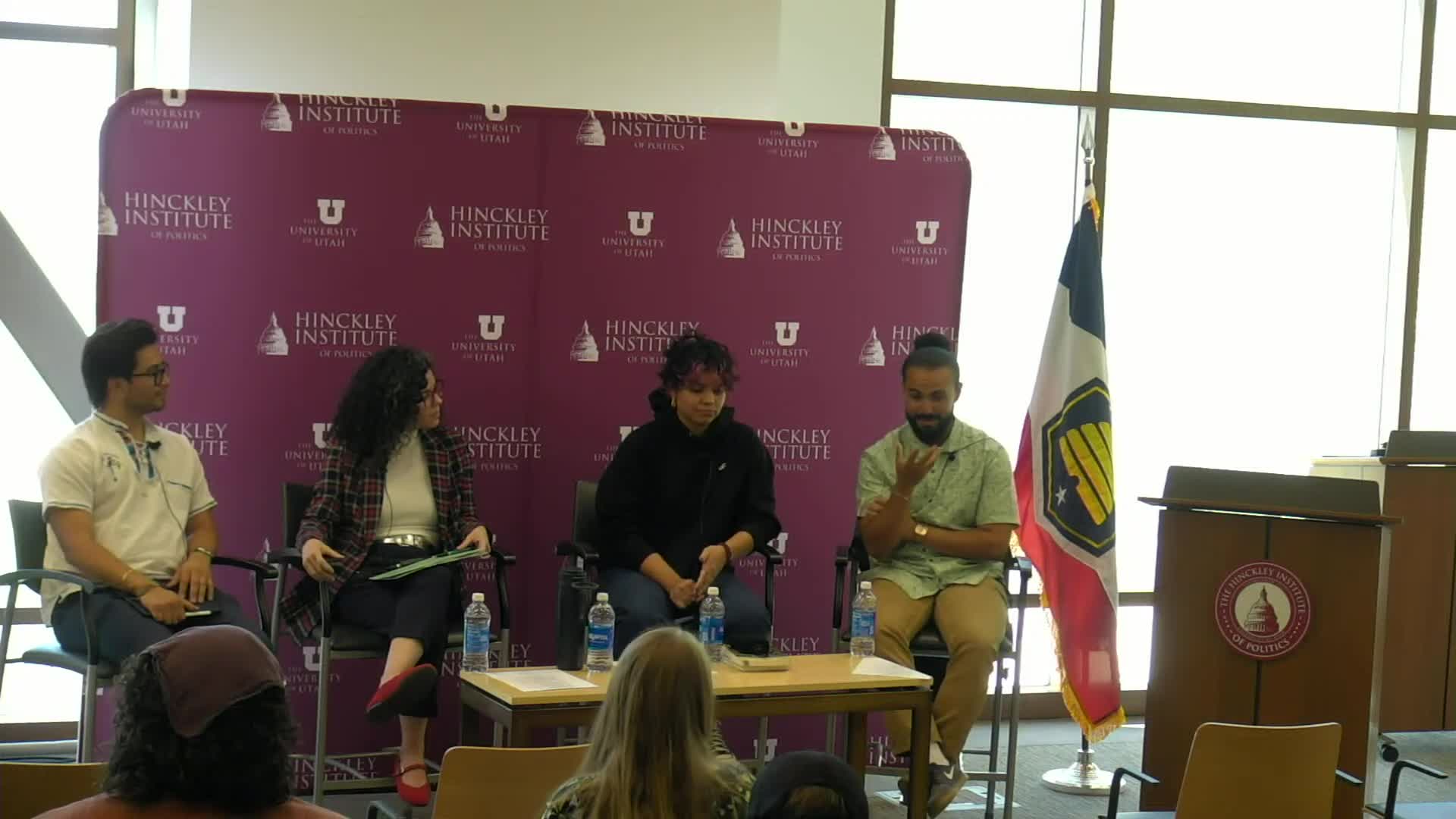
Summary
Panelists advised students and allies on practical ways to build communities that resist erasure on campus, including off‑campus organizing, small‑scale scholarship efforts and diversified coalitions.
Speakers at a University of Utah panel on Latine Heritage Month urged students to use both on‑campus and off‑campus tactics to preserve community spaces and resources. Moderator David Leon framed the session as personal testimony rather than university policy. Why it matters: panelists said campus policies and practices can limit community formation and recommended pragmatic steps students can take to create sustaining networks. Practical organizing steps discussed included meeting off campus when campus rules limit gatherings, finding ‘‘co‑conspirators’’ across identities, and starting small projects that can scale. Cristian Gutierrez described launching a scholarship effort after repeatedly recruiting undocumented students without institutional scholarship supports: “That scholarship program started off as we’re just gonna raise enough for one scholarship for a student in Ogden, and in a matter of a year, that blew up and went nationwide,” he said. Panelists used the term “co‑conspirators” to describe allies who move beyond token support to active collaboration. They encouraged students to identify people with complementary skills and hustle, and to recognize that not every friend will want or be able to be an organizer. Faculty and staff speakers recommended leveraging campus resources where helpful but also building networks outside formal campus structures. Dr. Leandra Hernandez and other faculty described supporting student‑led collaboratives, community‑based research projects and small resource pools that address local needs. On allyship, panelists told non‑Latine attendees to do preparatory work — read, attend events, support Latine authors and groups — rather than relying on panelists or students to be always the teachers. One panelist summarized the advice: “To then have to stop to educate you, it can be… frustrating. My job, as much as I wanna welcome folks in, I shouldn't have to be the one teaching you everything either.” The panelists recommended a range of actions — from hosting potlucks and book clubs to creating scholarships — and emphasized that many successful initiatives start small and grow when people find committed partners.