
CalHFA reports nearly 7,000 households served in FY24-25; MyHome, Dream for All, MyAccess, and Zip explained
Get AI-powered insights, summaries, and transcripts
Subscribe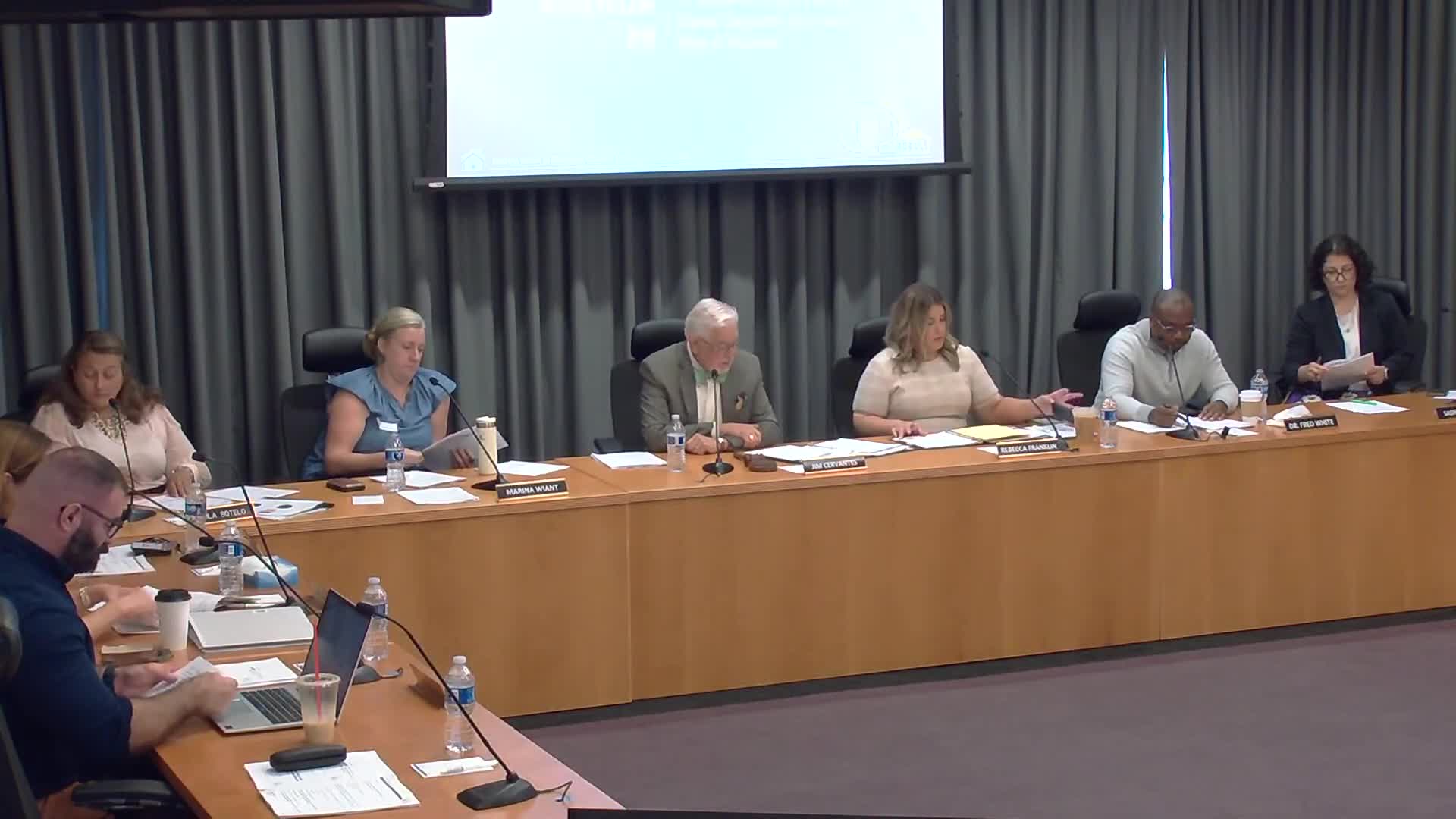
Summary
CalHFA presented performance data for single-family down payment assistance programs: nearly 7,000 households served in fiscal year 202425, $280 million in assistance dispersed, $3.1 billion in first-mortgage securitizations, and $63 million in revenues that funded 70% of agency operations.
CalHFA officials told the board on Sept. 18 that the agencysingle-family down payment assistance programs served nearly 7,000 households in fiscal year 202425, dispersing about $280,000,000 in down payment assistance loans that supported roughly $3,100,000,000 in first-mortgage securitizations and generated $63,000,000 in operating revenues.
The presentation, led by Ellen Martin, CalHFAdirector of homeownership, traced program performance across MyHome (the agencyflagship program), Dream for All, the Zip 0%-interest closing-cost product, and the newer MyAccess taxable bond-funded product.
Why it matters: the agencybusiness model pairs low-cost subordinate down payment assistance with a CalHFA-originated first mortgage that is then securitized on the secondary market; proceeds from those transactions fund CalHFA operations and recycle down payment assistance funds.
Martin summarized key FY24-25 results: down payment assistance programs served nearly 7,000 households and provided $280 million in assistance; Dream for All accounted for over 70% of total assistance dollars but only about 24% of borrowers because Dream for All awards are larger per household. Conversely, MyHome made up roughly 2428-28% of total loan dollars but accounted for about 71% of borrowers helped.
Martin described product mechanics: "My Home is a second lien loan that provides up to 3 and a half percent down payment and closing cost assistance," she said. MyHome is a silent second with a simple 1% interest due on sale or refinance. Zip provides an additional 23% for closing costs at 0% interest but typically raises the first-mortgage rate 75 to 125 basis points. MyAccess, launched in March, is funded via taxable mortgage revenue bonds; it usually carries a higher rate than MyHome but offers more flexibility for down payment and closing-cost uses than Zip.
Board members asked practical questions about lender and community partnerships, use of CDFIs and community-based organizations, condominium financing constraints, and program sustainability. On lender participation, Martin and Molly Ellis, head of Lender Services, said CalHFArelies on an approved lender network to originate first mortgages; CDFIs and credit unions can originate if they meet CalHFA criteria. "Those lenders do not have to offer CalHFA programs and products," Martin said, underscoring the need to design lender-friendly products.
On sustaining the model, Martin explained that CalHFA does not receive general fund support for its core operations and instead depends on margins from the first-mortgage securitization to fund operations. Martin and Deputy Finance staff warned that directly funding larger subsidy loans from taxable bond executions or program reserves would not be financially sustainable for the agency as currently designed: "down payment assistance by nature... is not financially sustainable for the agency," one staff member said during Q&A.
Martin highlighted geographic patterns: MyHome performs strongest in inland regions (Capital Region, Central Valley, Inland Empire and rural areas) where home prices are lower; Dream for Allset-asides shifted participation in coastal counties and affected the racial/ethnic composition of recipients in FY24-25.
The board and staff discussed next steps for program design, performance measurement, strategic plan alignment, and outreach. CalHFA said it will refine MyAccess metrics and consider modest adjustments to the Calusas mortgage relief fund criteria; staff will return with program updates and any proposed program-rule changes at upcoming meetings.
Ending: the presentation closed with board appreciation for staff outreach work, lender relationships and operational details; no public comment was received on this agenda item.