NVCOG staff outline Vision Zero and Safe Streets plan, seek local project input
September 20, 2025 | Town of Naugatuck, New Haven County, Connecticut
This article was created by AI summarizing key points discussed. AI makes mistakes, so for full details and context, please refer to the video of the full meeting. Please report any errors so we can fix them. Report an error »
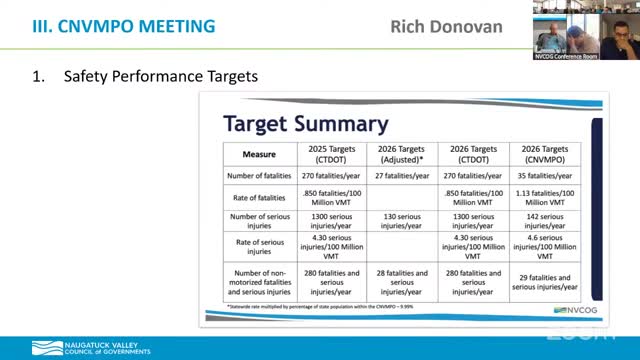
The update tied two threads: (1) the federal Safety Performance Measure process under the Highway Safety Improvement Program (HSIP), which requires Metropolitan Planning Organizations either to accept statewide targets or set their own within 180 days; and (2) the regional Safe Streets and Roads for All (SS4A) grant work that will produce an updated regional safety action plan intended to qualify projects for future SS4A rounds.
Why it matters: NVCOG staff said the plan and an annual safety progress report will document crash patterns, propose countermeasures targeted to crash types, and identify fiscally constrained and unconstrained project lists for grant applications. "This will be a full rewrite of that plan," Rich said, noting the update follows USDOT guidance and that a draft will be available in December.
Key points presented:
- NVCOG staff have run a roadway safety analysis using detailed crash data from Connecticut crash repositories; the analysis will produce a high-crash network and countermeasure recommendations that match the crash types observed.
- The MPO safety-target setting process is underway; staff expect to present methodology and targets for formal adoption in November after informal agreement with CTDOT and FHWA on methodology.
- Project solicitation has included visits with municipal police, public works and engineering departments to capture local knowledge about dangerous locations that crash data alone may not expose.
- NVCOG will expand services to member towns: a tiered roadway-safety study program, increased data availability and an online Vision Zero map/dashboard, expanded training/education for municipal staff and a proposed post-crash infrastructure response team to analyze serious crashes and recommend near-term and permanent countermeasures.
Staff emphasized legal protections for planning data and analyses under federal statutes, noting that planning materials assembled for safety improvement are not intended to increase municipal liability. The presentation included national evidence about countermeasures: Rich cited a national average 89% reduction in serious injury and fatal crashes for modern roundabouts in appropriate locations and described how roundabouts reduce conflict points and kinetic energy transfer in crashes.
Ending: NVCOG staff asked municipal officials to keep providing local information and to schedule follow-up meetings so the region’s safety action plan will reflect both the crash data and on-the-ground concerns. The draft plan will be publicly released in December for engagement and then used to pursue project funding.
Don't Miss a Word: See the Full Meeting!
Go beyond summaries. Unlock every video, transcript, and key insight with a Founder Membership.
30-day money-back guarantee
Sponsors
Proudly supported by sponsors who keep Connecticut articles free in 2025

