Board reviews Dual Language Immersion outcomes and enrollment patterns; parent satisfaction high, bridge completion lower
September 20, 2025 | Provo School District, Utah School Boards, Utah
This article was created by AI summarizing key points discussed. AI makes mistakes, so for full details and context, please refer to the video of the full meeting. Please report any errors so we can fix them. Report an error »
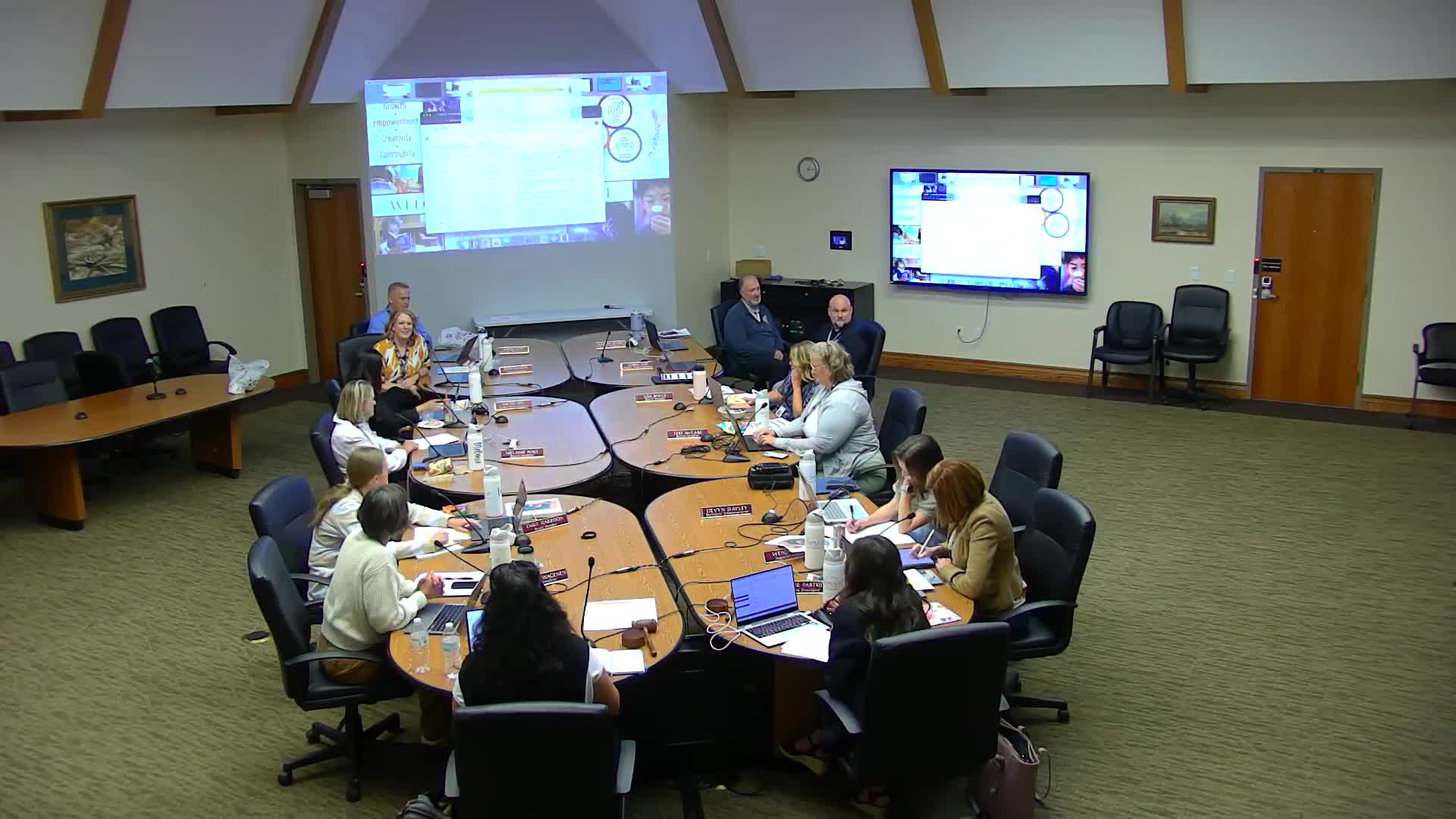
Doug Finch of district staff summarized the program structure and history, noting that most of the district's DLI offerings are one-way immersion programs and that Timpanogos Elementary operates a two-way Spanish program outside the state DLI assurances. Finch said the state's stated goal for DLI is that "students would be able to have the opportunity to become bilingual, biliterate, and culturally competent in a global community," and he pointed board members to the Utah State Board of Education assurance documents for DLI implementation.
Jamie (district staff who led recent surveys) presented parent and teacher survey results: about 94.8% of responding parents reported they were satisfied or very satisfied with their child's DLI experience, and respondents praised teacher use of the target language and instruction. Jamie said the survey indicated parents most wanted stronger student spoken-language opportunities and clearer pathways for students to progress to the high-school bridge (concurrent-enrollment) courses.
The board also heard an analysis from district research (Nate Mitchell's study was cited) showing that about 40% to 50% of students who begin DLI progress to high-school bridge classes (concurrent-enrollment that follows AP-language performance and allows college credit). Board members noted that while AP pass rates are strong for students who take the bridge-level tests, a meaningful share of DLI completers do not take or pursue the bridge coursework.
Finch and Jamie reviewed enrollment patterns that have changed since COVID: historically about one in three Provo students participated in DLI; current cohort enrollments are often 50 to 60 students per program and the overall rate is closer to one in four. Some schools (Edgemont, Canyon Crest, Lakeview) show relatively balanced enrollment between DLI and English-only tracks; smaller schools that host immersion classes can create operational challenges because they must run parallel English and immersion sections.
Board members raised questions about equity and access (including whether lower-income neighborhoods have comparable access to DLI), how enrollment patterns affect school capacity and efficiency, and whether secondary schedules or elective availability discourage students from continuing to bridge courses. Jamie acknowledged the state's AP/bridge pathway is rigorous and that some languages (for example, Chinese) are particularly demanding on reading and writing skills; Jamie said the district has convened parent meetings at the high school level to address preparation for AP/bridge exams and to develop possible additional supports.
The board did not adopt policy changes at the study session. Members asked staff to assemble a written list of board questions, to schedule follow-ups (including bringing Nate Mitchell or other analysts for deeper data review), and to consult with neighboring districts and exemplar programs about magnet vs. neighborhood models and program costs. Finch and his team were asked to gather comparative district examples and to return with details.
As with the CAS presentation, the board framed the DLI discussion around program outcomes, equity of access and cost-efficiency; staff will return with more granular data and proposed next steps for board consideration.
Don't Miss a Word: See the Full Meeting!
Go beyond summaries. Unlock every video, transcript, and key insight with a Founder Membership.
30-day money-back guarantee
Sponsors
Proudly supported by sponsors who keep Utah articles free in 2025

Excel Chiropractic

