
Council debates transparency and structure of RFQ scoring, rubrics and recommending panel
Get AI-powered insights, summaries, and transcripts
Subscribe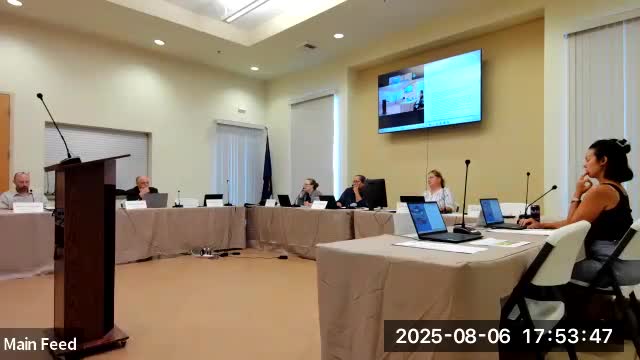
Summary
Councilors discussed whether to publish scoring criteria and rubrics in the RFQ, how to structure an evaluating panel, and whether an appointed recommending body should be subject to public‑meetings law.
Councilors and staff debated how transparent to be about evaluation criteria and who should evaluate responses to the Gateway RFQ during the Aug. 6 joint study session.
Matt Brinkley said the RFQ includes scoring criteria tied to the city’s stated goals and that those criteria could be refined before the city scores proposals. He noted the city can provide a scoring matrix (the number of points available by category) while withholding internal guidance used by the scoring panel to normalize individual scores.
Councilor Byers argued for transparency and practical guidance to lead developers toward proposals that meet Talent’s needs, while Councilor Panemiro cautioned that an overly rigid rubric could prevent the council from rewarding creative proposals that fall outside pre‑set categories. “I love rubrics,” Councilor Byers said in the meeting, but others noted rubrics should not be treated as a purely scientific result.
The group also discussed who should perform evaluations. Staff said the city could appoint a recommending panel that would be a public body subject to public‑records and public‑meetings laws; alternatively, staff could convene an internal recommending group whose work would be advisory to staff (and thus not itself a public body), and staff would bring a recommendation to council. Several councilors favored involving experienced council members and planning commissioners for land‑use perspective but expressed concern that a very large scoring body could complicate scoring and that evaluation panels should be limited to preserve consistency.
No final decision was made; staff will return with a proposed approach on panel composition and how much rubric detail to publish in the RFQ.