
Board recommends child-protection referral after traffic stop where infant waited in vehicle
Get AI-powered insights, summaries, and transcripts
Subscribe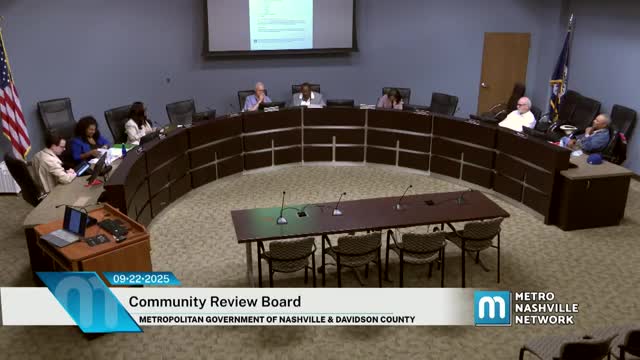
Summary
After reviewing CC2024-069, the board accepted the assistant director’s report and added a recommendation that officers might have been required to notify child protective services when a 13-year-old was left in a vehicle during a traffic stop that also involved drug evidence.
The Nashville Community Review Board reviewed case CC2024-069 involving a traffic stop in which a 13-year-old was left in a vehicle while the adult occupants were detained on drug-related allegations. The board accepted the assistant director’s report finding OPA’s investigation largely supported by body-worn-camera footage but added a recommendation that a referral to child protective services (CPS) may have been warranted.
Complaint summary: on Aug. 25, 2024, the complainant said her brother and his girlfriend were stopped; officers located marijuana and a scale in the vehicle. The couple were arrested and the complainant’s 13-year-old remained in the car for approximately 19 minutes, according to timestamps the board cited from body-worn cameras and CAD entries. Medics were on scene and the child was ultimately released to family members. The board noted no medical attention was required after the incident.
Board findings and concerns: the assistant director’s review agreed with OPA that the officers’ vehicle search and arrests were supported by probable cause and that the child did not present visible distress on the body-worn-camera clips the board reviewed. However several members raised concern about whether officers should have notified child protective services given the presence of drugs and a scale in the vehicle and the child’s exposure to the scene. One board member noted that law enforcement are mandatory reporters and that drug exposure can be a basis for dependency and neglect proceedings.
Disciplinary findings: OPA’s report indicated some findings were exonerated; the board’s review identified derogatory language by Officer 2 and recommended OPA include any missing body-worn-camera footage it relied on in the MOU exchange. The board also observed a disciplinary history for one officer in prior unrelated incidents and asked OPA and MNPD to consider whether the officer’s conduct warranted further attention.
Action: the board accepted the report and added a comment that, under the facts presented, a referral to child protective services “might have been warranted.” The motion passed.
Ending: The board sent its recommendations to the MNPD chief and the mayor and requested OPA include all body-worn-camera evidence referenced in its investigative file when returning documents under the MOU.