
Board accepts FY2025 financial reports; approves spending authority for $512,000 special-education deficit
Get AI-powered insights, summaries, and transcripts
Subscribe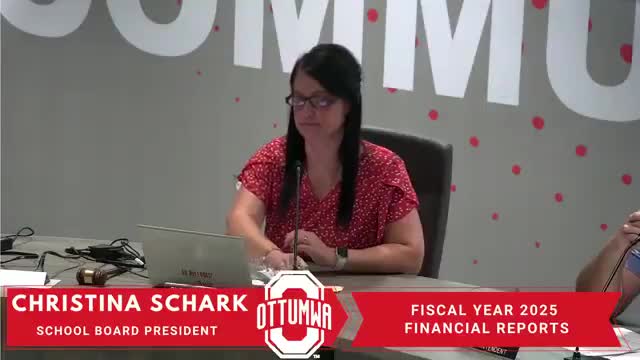
Summary
The board reviewed treasurer and fund balance reports showing a $1.1 million general fund surplus and $9.2 million capital projects balance after a bond issuance, and approved a request for state spending authority for a roughly $512,000 special-education deficit; transportation costs were held flat despite an 18.5% per-route rate increase
The Ottumwa Community School District board accepted fiscal year 2025 financial reports and approved district staff’s request for spending authority to cover an estimated special-education deficit.
John (staff member) presented the treasurer’s report, telling the board the district’s general fund ended the year with an approximate surplus of $1,100,000 and a solvency measure of about 12 (the district cited a recommended range of 7 to 17). The capital projects fund rose from about $6.1 million to $9.2 million after a bond issuance; those funds are being used for high school projects, the district said.
On special education, staff reported the program ran an estimated deficit of roughly $1.6 million in the prior year and the current-year deficit is about $512,000. John said the deficit narrowed for three reasons: an increase in state aid tied to higher counted special-education weights for some students, about $912,000 in Medicaid reimbursements (roughly $400,000 more than the prior year), and lower payments to other districts for tuition and placement services. The district said it requested state spending authority to formally recognize and spend against the deficit.
The board also reviewed a transportation report. District staff said a recent RFP increased per-route vendor rates by 18.5 percent, but the district absorbed much of that through route efficiencies and recorded a roughly $50,000 net savings year over year. Staff warned that future RFPs around the region are returning higher quotes as busing and wage costs rise.
A board member moved to accept the reports and approve the spending authority for the special-education deficit; the motion passed by voice vote. The meeting transcript does not record a roll-call tally. John invited board members to contact him with any follow-up questions and said staff will continue monitoring special-education costs and reimbursements.
The board did not adopt additional budget appropriations during the meeting; staff said the spending-authority request simply formalizes expenditure recognition already incurred in special education.