
Interim superintendent: Winston‑Salem/Forsyth Schools face roughly $37 million deficit; state repayment plan requested
Get AI-powered insights, summaries, and transcripts
Subscribe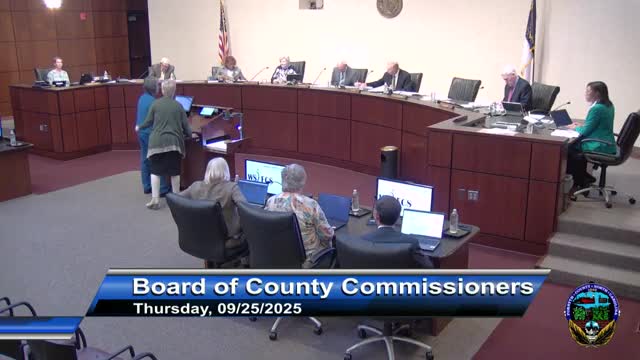
Summary
Interim Superintendent Catty Moore told Forsyth County commissioners that Winston‑Salem/Forsyth Schools are addressing a fiscal 2024–25 deficit now estimated at about $37 million, outlined reductions and next steps and said the State Board of Education has asked the district to present a repayment plan in Raleigh on Nov. 4.
Interim Superintendent Catty Moore told the Forsyth County Board of Commissioners on Sept. 25 that Winston‑Salem/Forsyth Schools are contending with a fiscal 2024–25 deficit now estimated at about $37,000,000 and are working on a repayment plan the State Board of Education has asked the district to present in Raleigh on Nov. 4. Moore said the state will begin charging interest on the district loan at 0.4% as of Oct. 1 and requested a repayment plan to begin by January 2026.
Moore said the district is addressing two linked problems: the outstanding deficit from 2024–25 and balancing the 2025–26 budget to avoid a repeat. She summarized the district’s current financial steps and shortfalls: “We have 2 issues. 1 issue is the fiscal deficit from 24‑25. That is now currently estimated at around $37,000,000,” and later identified specific vendor and liability amounts she said remain owed, including the district’s payment to the Department of Public Instruction (DPI) of about $3,400,000 and separate unpaid contractor amounts Moore described as roughly $5.7 million for the substitute management system and $4.2 million for custodial services. Moore attributed part of the decline in available funds to lower federal carryover and the end of pandemic relief funding on Sept. 30, 2024.
To balance the 2025–26 budget and create capacity for repayment, Moore said the district has identified about $63,000,000 in reductions across personnel and non‑personnel categories. She described a districtwide reduction in force that resulted in about 224 personnel receiving reduction notices and other measures including temporary furloughs for central office staff (five, eight or 12 days depending on salary band), limits on releasing budgeted funds to schools and central offices (holding spending at about 50–75%), and reassignments tied to a Day‑10 enrollment of 49,224 students — roughly 1,300 fewer than projected.
Moore said the district still estimates that $15,000,000–$20,000,000 is owed to itself due to appropriations applied to the wrong funds and that those negative balances will remain findings in the district audit until cleared. She told commissioners the district’s external auditors asked to extend delivery of the audited financial statements pending an additional review of internal controls requested by the State Board of Education and the Local Government Commission, and that auditors plan to present interim findings at the district’s Oct. 28 board meeting.
Moore outlined options for repayment: receive new revenue (state or county appropriations or a loan) or reduce expenses, noting each option’s tradeoffs. Using the example of a target repayment of about $300,000 per month, she said that amount would equal about $3.6 million per year — equivalent to about 48 staff positions at an assumed $75,000 total cost or roughly 10–15% of the local supplement budget. She cautioned that eliminating that gap entirely via staff reductions would require many years if applied partially and said the district will present more precise RIF savings and final audit numbers when available.
Commissioners asked for clarifications about past overrides of budget limits, transfers between funds, and the district’s new Tyler ERP system. Moore said the new ERP now requires a verified budget or a preapproved transfer before processing an expenditure and that the ability to override budget limits is no longer available in the system. Moore also committed to delivering the Article 46 reconciliation and a quarter‑one report to the county manager and board in October.
The presentation blended discussion of immediate cash‑management obligations and longer‑term planning; Moore emphasized that until negative fund balances are cleared the audit will continue to record findings and that the district is pursuing both internal reductions and dialogue with state and county officials about repayment options.