
Lake Clark Shores board debates enforcement and homeowner education after repeated yard-waste piles in streets
Get AI-powered insights, summaries, and transcripts
Subscribe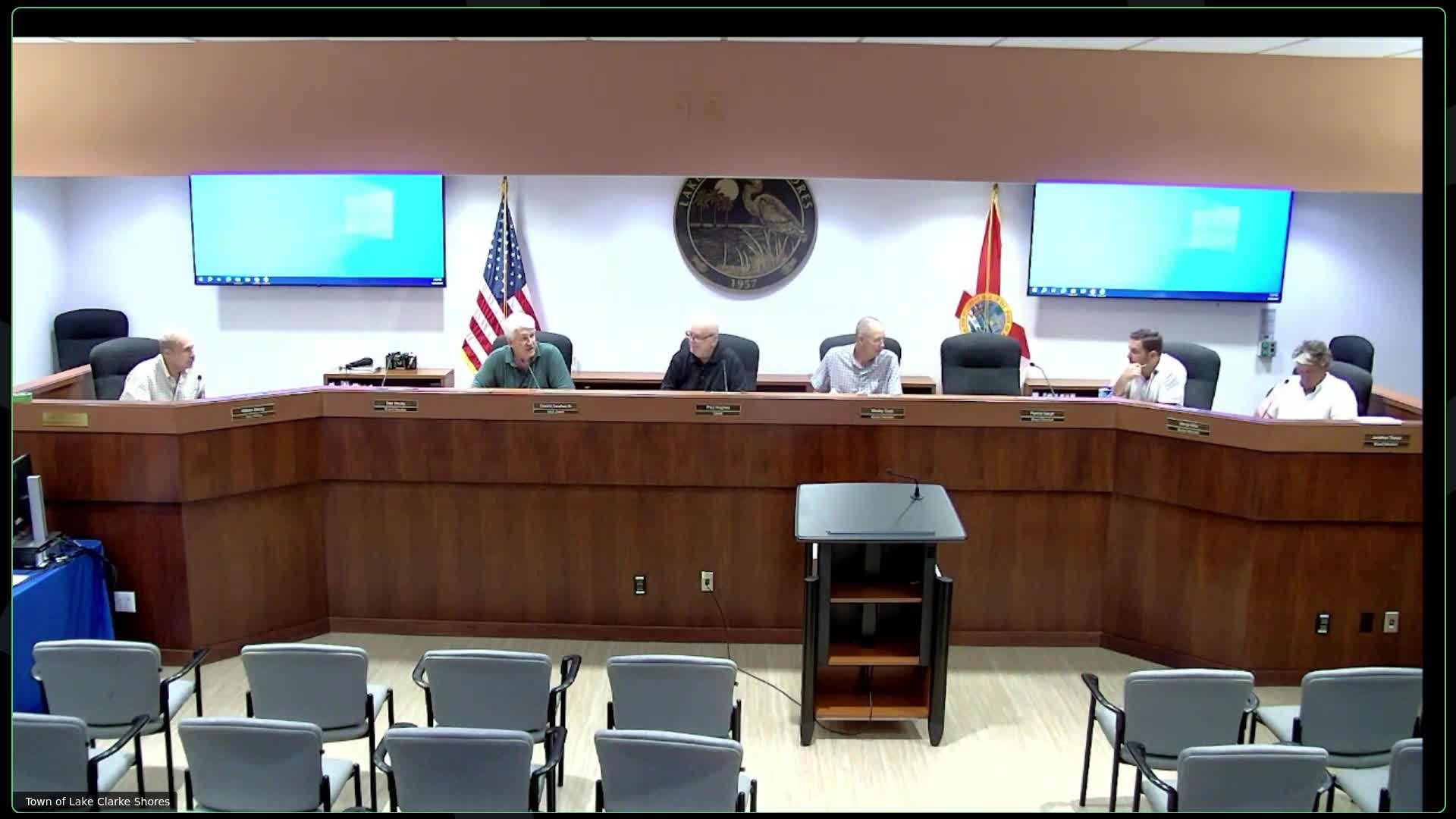
Summary
Board members and town staff discussed recurring yard-waste and landscape-trimming piles left in streets, with police and code-enforcement officials describing responses and board members urging clearer enforcement, homeowner education, and possible changes to pick-up timing or code removal.
During the Sept. 25 meeting of the Town of Lake Clark Shores Code Enforcement Board, members raised concerns about repeated instances of yard-waste and landscaping debris placed in public streets, citing public-safety and nuisance risks and debating enforcement options.
Residents and board members reported seeing large piles of vegetation and clippings placed in roadways, sometimes blocking visibility and presenting safety hazards. A member of the police department (identified in the transcript as the chief) told the board, “If it's a public safety concern, you call the police department. We'll go out right there from there,” and staff described routine follow-up by code officers when violations are reported.
Board members and staff discussed several enforcement and outreach options: stricter enforcement of the existing ordinance; homeowner education and reminders in the town newsletter; contacting landscapers who leave debris in the street; and adjusting allowable placement times so residents do not set out vegetation too early in the week. Chair Paul Hughes said the town should enforce codes or remove them if council does not want enforcement: “I think the council either needs to decide, 1, we're gonna enforce it, or 2, we're not gonna enforce it.”
Code Enforcement Officer Eric Rich Wagon said the most common issue is residents putting vegetation at the curb too early and that staff are discussing ways to approach the problem. Staff noted that enforcement typically targets property owners rather than third-party landscapers, and that successful compliance in other communities relies on homeowner education and clear expectations.
Discussion vs. decision: the board held an extended discussion and did not adopt a new policy or motion; members asked staff to pursue outreach and to return with options for the governing council if stricter enforcement or code changes are recommended.