
Whiteland redevelopment authority approves lease‑rental bond plan for roundabout, 3-0
Get AI-powered insights, summaries, and transcripts
Subscribe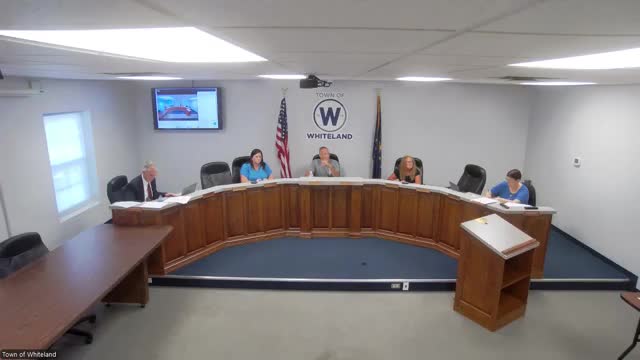
Summary
The Redevelopment Authority of Whiteland voted 3-0 to adopt a resolution authorizing lease and bond documents to finance a roundabout and related improvements serving the town’s industrial park.
The Redevelopment Authority of Whiteland voted 3-0 to adopt a resolution authorizing lease and bond documents to finance a roundabout and related improvements near the town’s industrial park.
The resolution authorizes two financing leases, a trust indenture and related bond sale documents so the authority can issue lease‑rental bonds to fund an estimated $2.5 million roundabout project and ancillary work. The board’s action followed a presentation from town staff and the authority’s bond counsel explaining how the structure would allow the town to fund the work without starting the town’s TIF bonding clock.
Town staff member Carmen told the authority that traffic volumes have risen sharply around the industrial park and that “we now have upwards on the South Side Of Whiteland Road in that industrial park of close to 3,000 employees that are coming in and out of that park on a daily basis.” She described the proposal as an interim improvement that would tie into future state and local projects and said the plan also includes license‑plate‑reader cameras and public artwork in the roundabout’s center.
Jacob McClellan of Bose McKinney & Evans, who identified himself as bond counsel, described the financing structure in detail and cautioned the board about statutory debt limits that the lease approach is designed to avoid. “When a city, county, or town wants to borrow, they have special processes they have to go through to borrow. They can't just go to the bank and get a loan,” McClellan said, summarizing why the authority and the town use a lease‑rental vehicle and related documents. He explained that the documents before the authority include (a) a base lease (a ground/ownership lease from the town), (b) a project or financing lease (from the authority to the redevelopment commission), and (c) a trust indenture and bond documents that set payment flows and trustee responsibilities.
Key terms presented to the board included a not‑to‑exceed aggregate bond amount of $2,750,000, a maximum interest rate of 6 percent, and an expected repayment term of roughly 10 years (with a not‑to‑exceed term of 12 years identified in the resolution). McClellan said the project payments under the financing lease will be structured to align with bond debt service and noted a working annual payment cap used for planning: “there's a not to exceed, of, I think, $400,000 per year.” The town plans to support lease payments primarily through a pledged “special benefits” property tax and other available town revenues; the redevelopment commission will not be pledging captured TIF dollars in a way that would start the TIF clock, McClellan and staff said.
Staff explained other project details: the roundabout would eventually link to a stub at Moore Logistics Park and to local connectors such as Warrior Trail; right‑of‑way limits prevent work all the way to the interstate on the current schedule; and the package includes public‑safety equipment—described in the meeting as “flock cameras” or license‑plate readers—and artwork by Bowmar Industries to sit in the roundabout’s center. Town staff said the Indiana Department of Transportation (referred to in the meeting as NDOT) has identified interchange work at I‑65 Exit 95 that could change traffic patterns in the area once funded and constructed.
Meeting presenters and bond counsel described the procedural steps remaining: the town council previously held required hearings and adopted an ordinance establishing the redevelopment authority and a council resolution supporting the financing. If the financing proceeds, the redevelopment commission will adopt parallel resolutions, the leases and bond purchase agreement will be executed, and a public notice will start a 30‑day remonstrance period during which interested parties may object to the lease financing. McClellan estimated a likely closing in mid‑November if pricing and approvals proceed as expected.
Board members signed oaths of office at the meeting and then voted on the financing resolution. The motion on the floor—recorded in the meeting as a motion “to approve resolution number 20 20 five‑one”—received a second and passed by roll call. The board recorded a 3‑0 vote in favor; the meeting minutes show the action “adopted” and staff collected signatures and next steps.
The authority’s next steps are administrative: finalize bond pricing and the addendum that will align the financing‑lease payment schedule to the bonds, execute the base and project leases and the bond purchase agreement when pricing is available, observe the 30‑day remonstrance period, and proceed to closing if no remonstrance prevents the issuance. The board was told the documents limit official liability to the town and project revenues and that individual members would not have personal liability for the bonds.
Votes at a glance
• Motion to approve resolution number 20 20 five‑one (authorizing leases, trust indenture and bond documents): adopted by roll call, 3‑0.