
Lakewood public safety committee narrows TNR ordinance, defers final council vote
Get AI-powered insights, summaries, and transcripts
Subscribe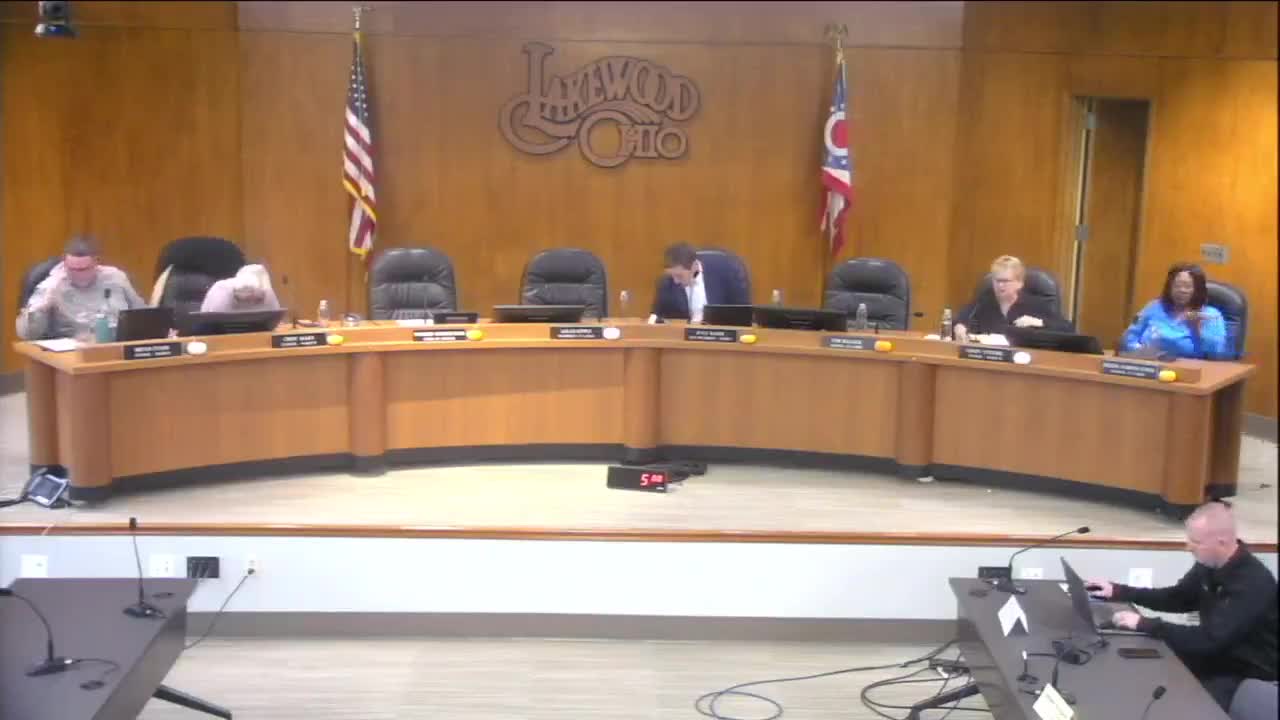
Summary
The City of Lakewood's Public Safety Committee continued work on a trap-neuter-return (TNR) ordinance on Oct. 20, approving a revised draft as a working document but failing to resolve registration and training rules. Council later deferred the ordinance at full council.
The Lakewood Public Safety Committee on Oct. 20 approved a revised Trap-Neuter-Return (TNR) draft as its working document but left unsettled whether the city will require registration or proof of training for community trappers.
Committee Chair Council Member Matt Stupich opened the discussion and moved to substitute the latest TNR draft from the law department, dated Oct. 13, as the committee’s working document; the motion passed. The substitute document removes the city’s responsibility for financing the program, Stupich said.
The substitute draft, however, did not settle two central disputes: whether registration of volunteer trappers should be mandatory, and whether trappers must show proof of training. Nancy Binder, chair of Le SWAB, and Megan Galeta, community CATS director for CLAWS (Citizens’ Committee for Lakewood’s Animals and Shelter), urged the committee against mandatory registration and certificates of training. "Our board would prefer not having the registration at all because they feel it would turn away large groups," Binder said. Galeta said required registration and proof-of-training "is the piece that's not gonna work" for volunteers who do TNR as unpaid, ad hoc work.
Law department staff described a narrower approach intended to address liability and public-safety concerns. Staff proposed a one-time annual online registration requiring a name, home address, phone number, trapping addresses, and an electronic signature; it would remove the earlier requirement that trappers provide written property-owner permission. The law department also proposed that a record be kept of additional addresses where trapping occurs (a simple email notification to an animal-control officer) and that training be accepted if approved by the animal-control supervisor rather than via a formal certificate.
The committee also discussed language to allow the city to act when unsanitary conditions or hoarding arise, and whether an owner should be responsible for veterinary costs when animal-control staff treat an animal to save its life. The law department and animal control officer Gary Crumley said they would continue drafting clarifying language on unsanitary conditions and owner responsibility.
Public- and stakeholder-facing groups emphasized alternatives to mandatory rules. Le SWAB recommended removing fee and funding mandates from the ordinance to preserve flexibility for grants and subsidies. CLAWS offered to provide voluntary training and suggested the ordinance language instead recommend best practices rather than require certification.
After additional changes were promised and Le SWAB and CLAWS agreed to review recommended language from animal-law practitioner Dana Panella, the committee left the draft in place as its working document and signaled further review. At full council later in the meeting the ordinance (substitute ordinance 20-20-25) was moved to defer for additional work.
Next steps: the committee will continue to refine registration, training and unsanitary-conditions language with input from Le SWAB, CLAWS and the law department; the ordinance remains under review and was deferred by full council for further revision.
Ending: The committee emphasized balancing volunteer participation with safeguards against bad actors; no final ordinance vote was taken on Oct. 20.