
Harris County sets deadline for unified worksite safety policy after months of labor calls for on-site monitoring
Get AI-powered insights, summaries, and transcripts
Subscribe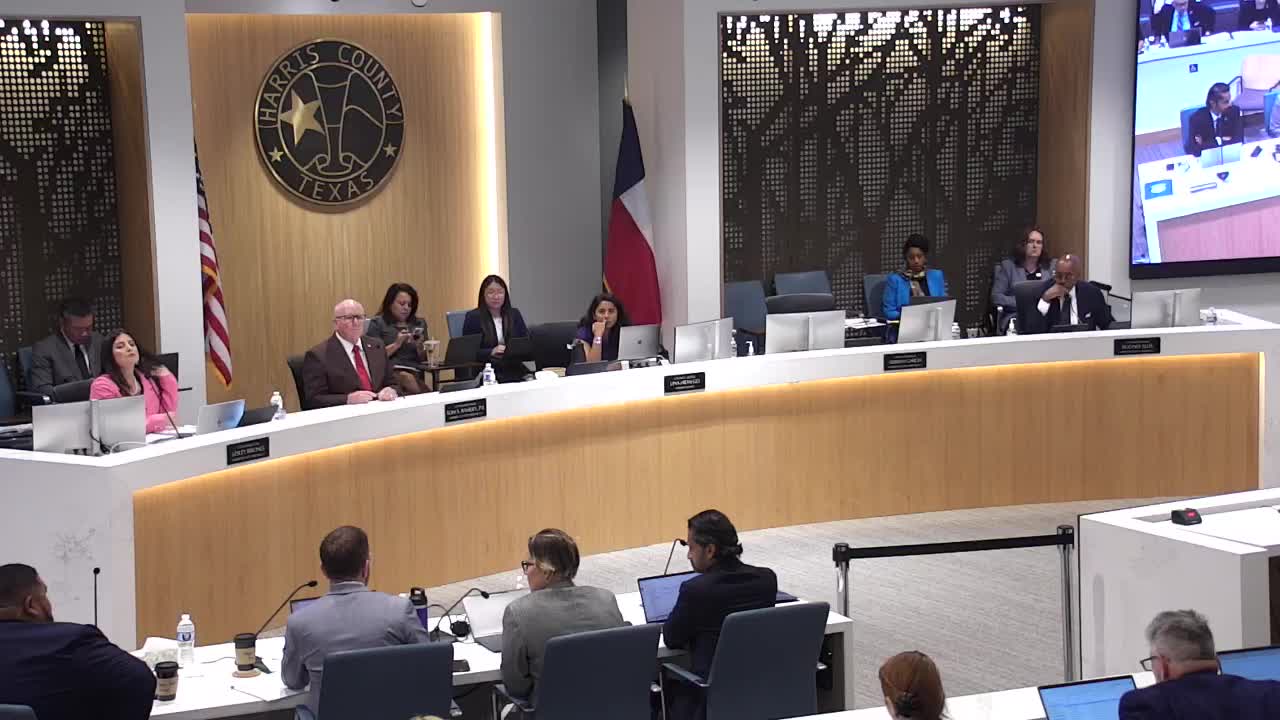
Summary
Commissioners directed county staff to produce a countywide “worksite safety” policy by Nov. 13, following months of advocacy by unions and construction-safety groups seeking routine on-site monitoring, anti-retaliation protections and clearer enforcement for county-funded projects.
Harris County commissioners on Oct. 16 directed county administrators, the county engineer, purchasing and other departments to return Nov. 13 with a countywide worksite safety policy that incorporates labor and industry feedback and models “evidence-based best practices.”
The court’s action follows weeks of testimony from union leaders, worker-advocates and contractors who argued the county’s contractor safety record rules are insufficient because they rely primarily on desk review and self-attestation. Speakers urged routine on-site monitoring, random audits, and explicit anti-retaliation protections so workers can report hazards without fear of losing their jobs.
The motion — made by Commissioners Briones and Ellis and seconded on the floor — asks County Administration to partner with the county engineer, the Harris County Toll Road Authority, the Flood Control District, the Office of Economic Equity & Opportunity, Purchasing and the county attorney to return with a single draft policy. The court set a Nov. 13 deadline and asked departments to incorporate input from labor and construction stakeholders.
Witnesses at the meeting described local and national precedents. Paul Puente of the Houston Gulf Coast Building & Construction Trades Council testified that tripartite agreements and proactive monitoring used at major projects have reduced lost-time accidents and rework. Workers Defense Project and other labor advocates urged use of the Travis County “Better Builder” model and other worker-centered compliance efforts.
Supporters said better enforcement could lower injuries, save money from rework and improve long-term relations with contractors; some county officials said implementation must be practical and funded. Commissioners emphasized the need to pair any new requirements with staffing for enforcement — county staff and inspectors — and to avoid producing rules that cannot be enforced.
The court did not adopt a final text or new procurement language during the meeting; it instead established the interdepartmental work plan and deadline for a draft to come back to the court for review.
Ending: County staff and labor leaders will hold a series of meetings before Nov. 13; the court asked for public-facing draft language ahead of the return date so stakeholders can evaluate enforcement and funding implications.