
Risk Management presents claims trends; committee asks for department-level claims detail
Get AI-powered insights, summaries, and transcripts
Subscribe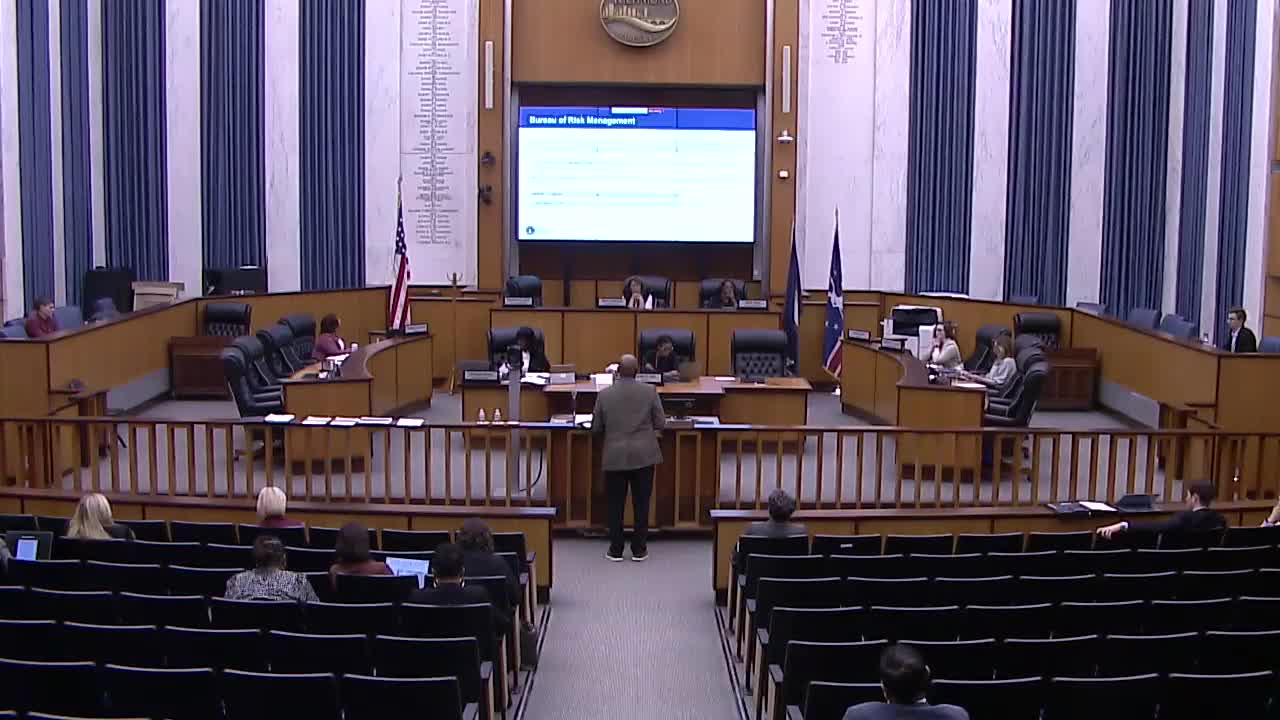
Summary
The city’s Bureau of Risk Management briefed the committee on liability and workers’ compensation claims trends, subrogation efforts and actuarial projections; members asked for department-level breakdowns and additional detail on firefighter illness claims.
Donnell Stewart, Richmond’s chief of risk management, gave an overview of the Bureau of Risk Management’s responsibilities and claims trends and answered committee questions about liability and workers’ compensation exposures.
Stewart said the bureau purchases commercial insurance, manages a self-insured municipality program, oversees general and auto liability claims, workers’ compensation, safety programs and subrogation to recover third-party damages. He told members the city receives roughly 700 liability claims annually and presented charts showing claims by type and department. "As a municipality, we are bound by federal, state, and local policies and laws," Stewart said, noting requirements such as OSHA reporting and state workers’ compensation rules.
Stewart said actuarial projections show increases in expected costs for fiscal year 2026: general liability projected to rise about 6%, liability claims 4%, and workers’ compensation about 11%, driven in part by rising medical costs. He also described an increase in firefighters’ workers’ compensation claims tied to expanded statutory cancer presumptions and related medical costs.
Committee members asked for a more detailed breakdown of paid liability claims and department-level data, including a more granular view of Police Department liability payouts and the drivers of the Fire Department’s increased workers’ compensation costs. Stewart agreed to provide the requested department-level claims data and additional context on firefighters’ exposures.
The committee also asked whether risk management analyzes other exposures, such as harassment and discrimination claims; Stewart said those matters are handled by Human Resources, and the bureau focuses on liability, workers’ comp and insurance procurement and subrogation.