
DeSantis credits Florida policies for lower crime rates and defends COVID decisions
Get AI-powered insights, summaries, and transcripts
Subscribe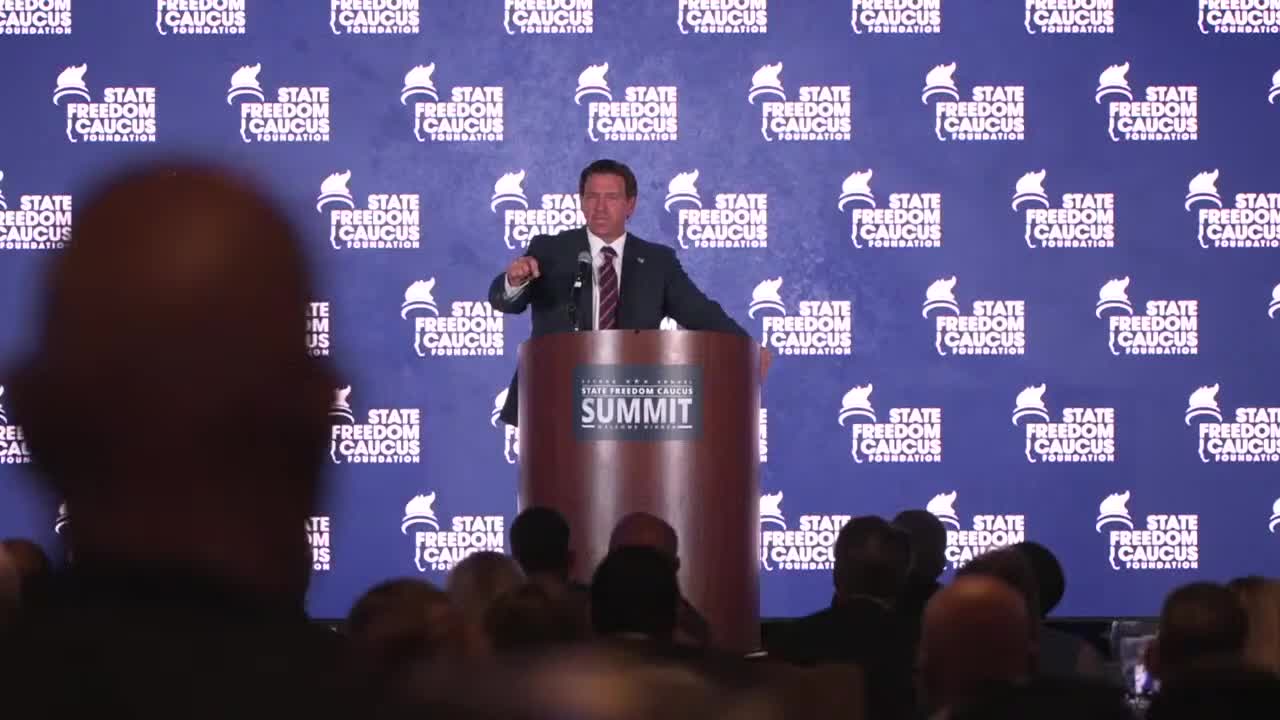
Summary
Gov. Ron DeSantis said Florida's approach to policing and prosecution produced a 50‑year low in crime and defended his decisions to keep schools open and reject mask mandates during the COVID‑19 pandemic.
Gov. Ron DeSantis said Florida’s policies on law enforcement and pandemic management have led to improved public‑safety outcomes and defended his administration’s pandemic decisions during remarks in Dallas, Texas.
DeSantis, the governor of Florida, credited stricter enforcement and removal of prosecutors who do not enforce the law for reductions in crime. “If you do the crime, you're gonna do the time. ... If you are a prosecutor, particularly those funded by George Soros, please know that if you don't enforce the law, I have done and I will continue to remove you from your post,” he said.
The governor said a 50‑year low in Florida crime rates followed the state’s policies. He also recounted his COVID‑era decisions, saying he issued an executive order requiring in‑person instruction in schools and resisted mask mandates and business closures. “Of all the things we've done, probably the most impactful was the state of Florida was the most responsible of any entity in this country for dragging this country out of the lockdowns and the mandates,” DeSantis said.
DeSantis said those pandemic decisions were politically unpopular at first but ultimately vindicated, and he argued they protected livelihoods and children’s education. He also referenced a CNN report in which a criminal defendant said they targeted Florida because offenders are jailed there, a point DeSantis used to argue Florida enforces criminal penalties.
Why it matters: Claims of reduced crime and of removing prosecutors who decline to enforce laws are consequential for local criminal-justice policy and elections for prosecutors. DeSantis framed pandemic decisions as central leadership choices with public‑safety and economic consequences.
What remains unspecified: The governor did not provide specific crime statistics, dates, or the names and offices of prosecutors he said were removed. He also did not provide citations or data backing the “50‑year low” claim during these remarks.
Speakers quoted in this article: Gov. Ron DeSantis.