
Discussion raised to reallocate $15,000 from two historic‑preservation grants to pay for code compliance
Get AI-powered insights, summaries, and transcripts
Subscribe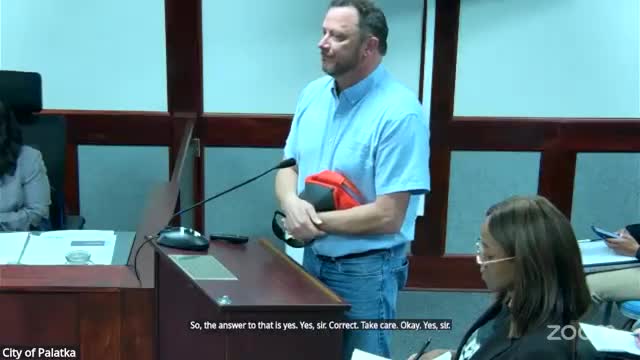
Summary
During a meeting segment, an unidentified participant asked about reducing $15,000 from both the South Historic and North Historic preservation grants to fund code‑compliance work. The transcript records discussion only; no formal motion or vote was recorded.
An unidentified participant (transcript label 1) asked whether $15,000 could be taken from each of two historic‑preservation grants — the South Historic and the North Historic grants — and used for code‑compliance work during a meeting segment. "And I have a question about, reducing the $15,000 by both on the South Historic and in the North Historic, from the historic preservation grant, reducing that by 15,000, and using it for code compliance," the participant said.
The question came amid audio and technical interruptions recorded in the transcript; other speakers briefly acknowledged the issue and helped the participant with the connection. A separate speaker (transcript label 2) is recorded saying, "So the answer to that is yes?" but the transcript does not capture a clear response or any formal motion to implement the reallocation.
The record shows only discussion of the possibility. The transcript does not identify who administers the South Historic or North Historic grants, how the $15,000 figure would be apportioned (for example, whether $15,000 total or $15,000 from each grant), or whether staff recommended the change. No mover, second, vote tally, ordinance, or resolution is recorded in the transcript segment provided.
Because the transcript captures technical difficulties and limited back‑and‑forth, the item remains a discussion point in the record rather than an approved action. Any formal change to grant allocations would require a recorded motion and vote or an administrative approval not documented in the provided snippets.
Meeting participants additionally called for a roll call earlier in the recording, but the transcript excerpts here do not show a completed roll call tied to this topic. The record does not specify a timeline for returning this topic to a future agenda or any staff follow‑up assignments.