
Austin Pets Alive reports 1,720 transfers from Austin Animal Center in fiscal year; continuing behavior and medical intake support
Get AI-powered insights, summaries, and transcripts
Subscribe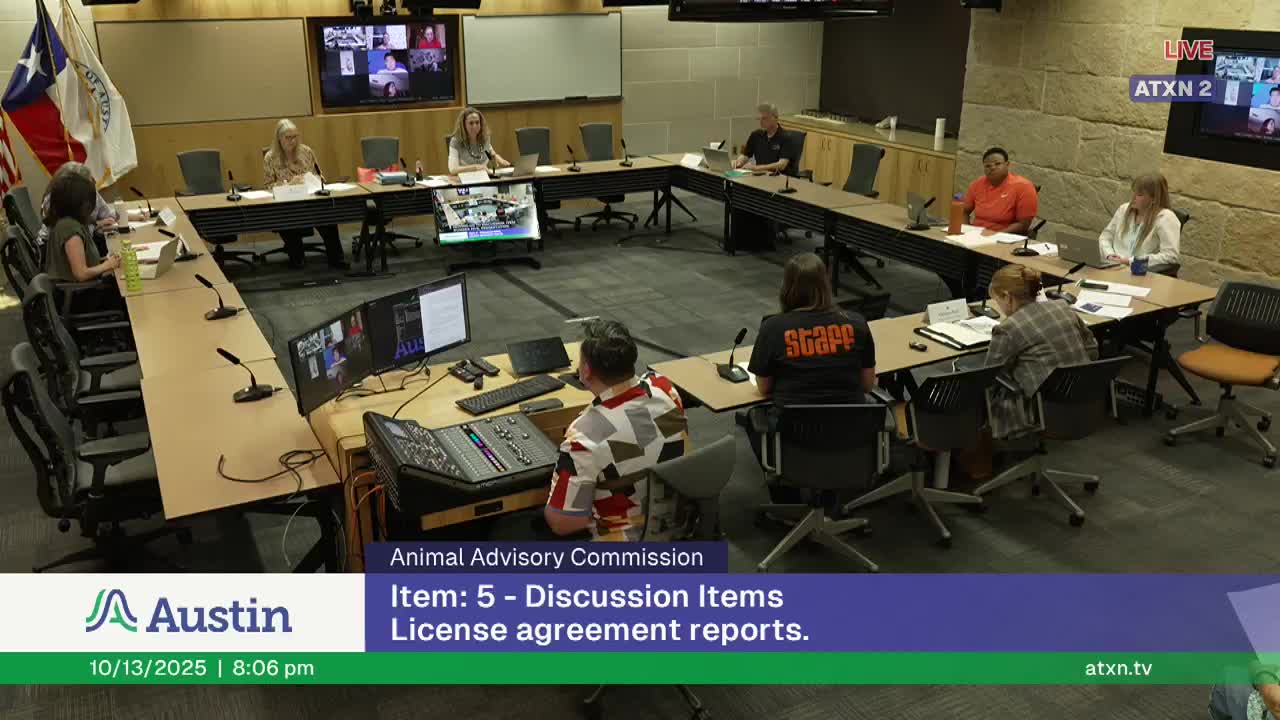
Summary
Austin Pets Alive told commissioners it exceeded its contractual transfer target and accepted hundreds of medically compromised and behavior-risk animals; APA said it is re-engaging with AAS to manage large behavior-dog transfers and asked for more rescue participation.
Austin Pets Alive (APA) told the Bridal Advisory Commission on Oct. 13 that it transferred 1,720 animals from Austin Animal Center over the most recent fiscal year, above the license agreement goal, and that a large share were medically compromised or behavior-program animals.
Data and role: Stephanie Bilbrough, APA director of operations, said APA's license agreement requires a transfer equivalent to 12% of the prior year's intake; APA reported pulling roughly 15.5% (1,720) during the fiscal year. Bilbrough said transfers included almost 750 bottle-baby kittens, more than 70 behavior-program dogs, 158 pregnant or nursing animals and a substantial number of parvopositive and other medically fragile animals.
Coordination with AAS: Bilbrough said APA and AAS are re-establishing a weekly review process so APA staff can meet AAS staff, inspect dogs and coordinate transfers; APA said it is currently the primary rescue partner accepting large, behavior-challenged dogs and urged other rescues to expand participation. "As far as we know, we're the only partner right now that's pulling large behavior dogs," Bilbrough said.
Why it matters: APA's transfers reduce the number of shelter euthanasias and provide intensive medical and behavioral care for animals that would otherwise face poor outcomes. APA's report underscores the dependence of the municipal shelter system on nonprofit rescue partners for life-saving placements.
Ending: APA offered to present more detail on specialized programs (for example, barn-cat placements) at a future commission meeting. Commissioners welcomed further collaboration on information-sharing and outcome tracking between AAS and APA.