
Miami-Dade committee delays decision on waiver that could allow septic tanks at affordable housing sites
Get AI-powered insights, summaries, and transcripts
Subscribe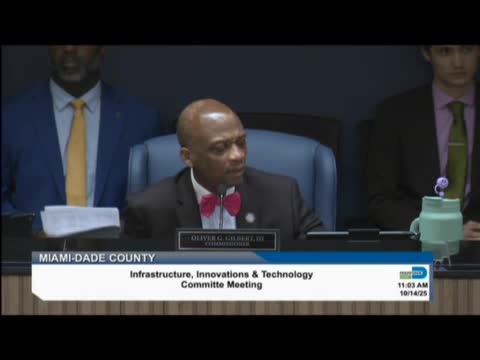
Summary
A Miami‑Dade County committee deferred action on an item that would waive requirements allowing some affordable housing parcels to use septic systems, citing missing data on sewer connection feasibility and a request for more analysis from county staff and outside jurisdictions.
A Miami‑Dade County committee on Wednesday deferred action on an agenda item that would waive requirements and potentially allow septic systems at certain affordable housing parcels, saying staff must gather more information about whether the properties can connect to sewer.
The committee’s chairman, Gilbert, announced the deferral after Commissioners raised concerns that some sites currently proposed for septic systems may be able to connect to sewer lines within months. “If they can connect, they do connect,” Commissioner Raquel Regalado said, urging that connections be required where feasible.
Why it matters: The discussion touched on infrastructure and long‑term costs for affordable housing developments. Commissioners said septic systems can be “really expensive and . . . very complicated,” and that allowing them where sewer connections are practical could leave future residents with avoidable burdens.
During the discussion Regalado said the county previously worked to change the definition of feasible distance for sewer connections and asked for more time for Durham to complete a feasible‑distance analysis. She also said staff needs additional information from North Miami Beach before the committee acts. Regalado recommended permitting proceed with a condition that, at the project’s tie‑down period, staff make a determination about whether a sewer connection is possible.
Chairman Gilbert put the motion to defer to the committee; the item was deferred to the next committee meeting. The motion was carried by voice vote; the meeting transcript records the item as deferred but does not record a roll‑call tally.
What was left unresolved: The transcript shows staff has not yet completed the feasible‑distance study for the parcels at issue and that North Miami Beach has not provided the requested connectivity information. Commissioners asked that, where sewer connections are already possible or will become possible within months, projects be required to connect rather than use septic systems.
Next steps: The committee directed the item be returned at its next meeting after Durham completes the feasible‑distance analysis and after staff obtains the outstanding information from North Miami Beach. No formal changes to policy or permits were adopted at this meeting.
Details and context: Committee members noted approximately eight to nine months as a timeframe in which some parcels could become connectable, depending on timing of construction. Regalado said the county has used the permitting process before to delay final connection determinations until the tie‑down period. The transcript includes references to “WASDE” and “WASI” in staff discussion about the breakdown of sites and information gathering; the record does not clarify those acronyms or provide further documentation.
Ending: With questions still open about connectivity and infrastructure, the committee paused action to let staff and Durham provide the needed feasibility analysis and to obtain data from North Miami Beach before deciding whether to allow septic systems on the identified affordable housing parcels.