
Pueblo West board debates security at public meetings and trials a condensed meeting schedule
Get AI-powered insights, summaries, and transcripts
Subscribe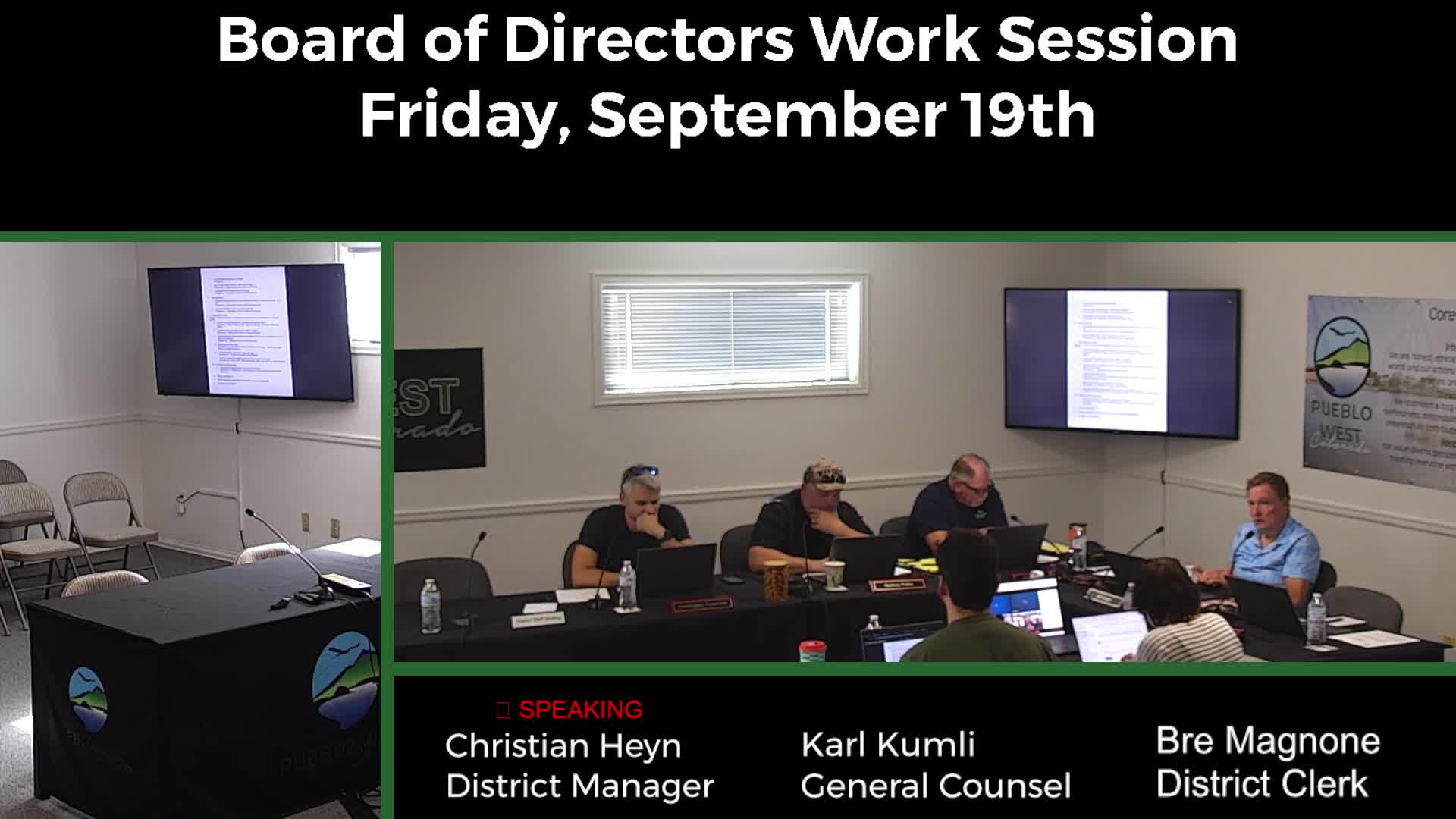
Summary
Directors debated whether to request a sheriff's deputy presence at public meetings and reviewed a public survey as staff proposed trialing a condensed meeting schedule to shorten the gap between discussion and action.
Board members spent a lengthy portion of the work session on two related management topics: in‑room security at public meetings and the district's meeting cadence.
Security: A director proposed asking the Pueblo County Sheriff's Office to provide a deputy for public meetings to deter violent incidents and rapid response. Board members and staff discussed pros and cons: some said a deputy could deter threats and make them feel more comfortable; others worried a visible uniformed presence could discourage public attendance. Staff said they routinely call the sheriff for meetings that have elevated concerns and that there are often patrol deputies in Pueblo West; the district manager said staff would reach out to the sheriff to discuss options, cost and whether deputies would be in uniform or plainclothes.
Meeting schedule: Staff presented results from a public survey (55 responses from about 1,859 recipients) and three scheduling models: keep the current two work sessions + two action meetings a month; condense to a two‑week cycle where extended discussion occurs on a Friday and action on the following Monday (the "condensed"/Highlands‑Ranch‑style model); or move to a one‑work‑session/one‑action meeting monthly trial. Survey responses were mixed: the public sample was small, with split preferences; 60% said meeting length was "about right," 50% said detailed discussion before decisions is "very important," and 62% preferred watching recordings or live streams to stay informed.
Board members expressed different preferences: some favored preserving work sessions as discussion forums and using Monday meetings for action; others favored a trial of a condensed schedule to reduce repetitive discussion and free staff time between cycles. Staff proposed a three‑month trial of the condensed model (October–December) and said they would update the board packet to reflect the trial if the board supports it.
Why it matters: changing cadence affects public access (evening vs daytime), staff workload and how quickly the board moves from discussion to decision. Security protocol changes affect public comfort, transparency and resource use.
Next steps: staff said they would contact the sheriff's office about routine presence/cost and prepare trial meeting calendars and updated packet timing for board review; the board left the item for further discussion on Monday and asked staff to prepare the logistics for the proposed trial.