
Linn County approves engineering contract to pursue $2 million KDOT grant for East 850 Road bridge
Get AI-powered insights, summaries, and transcripts
Subscribe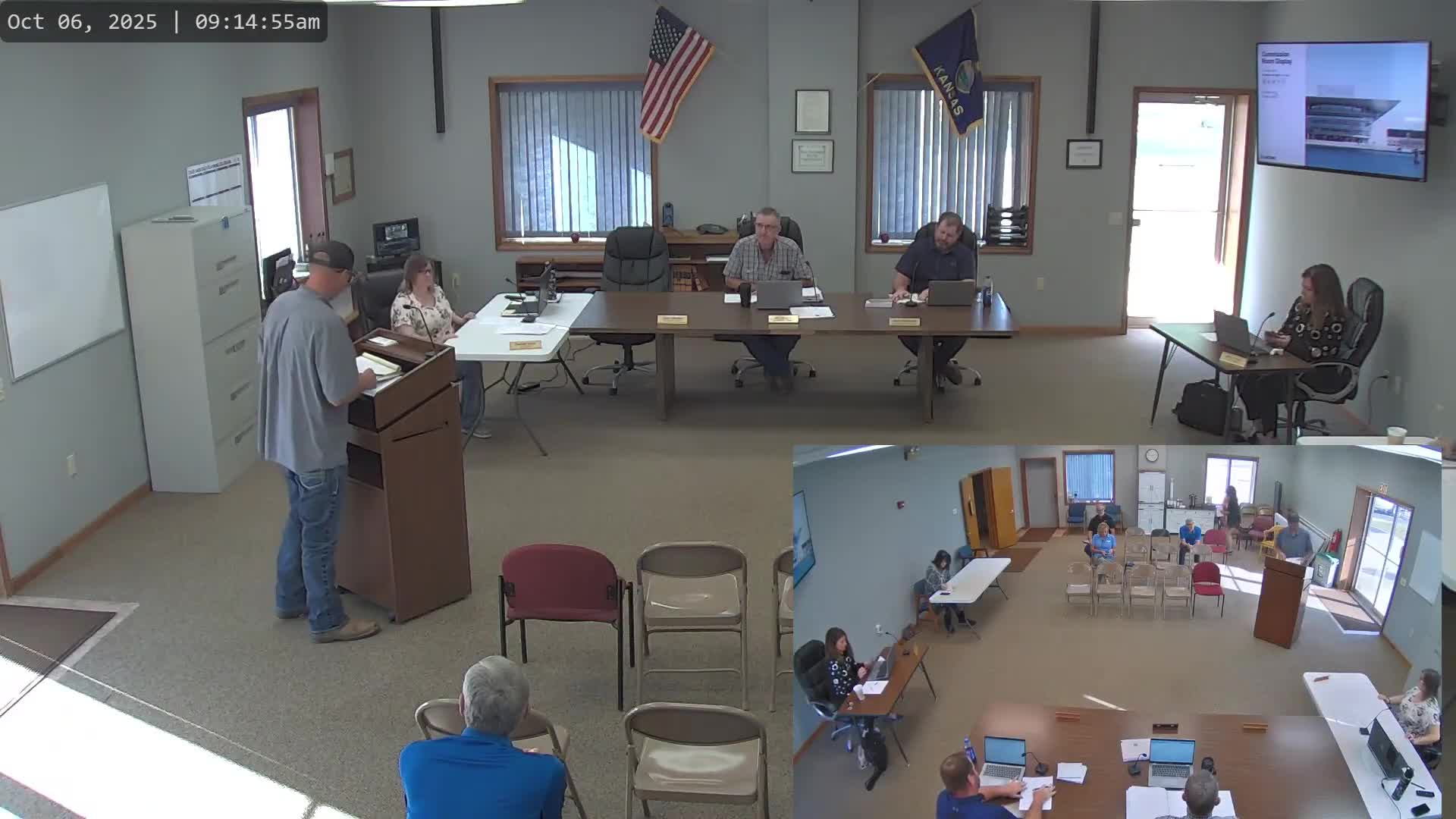
Summary
Commissioners approved a contract with Cook Platt & Stowall Engineers to complete preliminary survey and design work for an East 850 Road bridge replacement and accepted a separate form to accept a $2 million KDOT grant; county staff warned utility moves and historic-preservation negotiations could change the local cost.
Linn County commissioners voted to authorize a contract with Cook Platt & Stowall Engineers to produce preliminary plans and permitting work needed to pursue a $2 million Kansas Department of Transportation (KDOT) bridge grant for the East 850 Road crossing of Little Sugar Creek.
The county also authorized its public-works administrator to sign a 13-02 acceptance form to accept the $2 million KDOT project award for the same bridge.
The contract the county approved covers survey, engineering and related preconstruction work. Kenny Blair, an engineer with Cook Platt & Stowall Engineers, told the commission the firm estimates a 60% “field check” level of plans would cost about $50,520, with the full lump-sum contract totaling roughly $84,200. Blair described those early plans as the point when county staff would have the right-of-way and permitting information needed to decide whether to proceed.
Blair said the project’s single biggest unknown is utility relocation and negotiations with the state historic-preservation office. “We’re cautiously optimistic that we could accomplish this, but it’s, there’s no guarantees,” he said. He advised the commission that negotiating with the historic society often requires producing preliminary plans before the society will commit, and that utility moves — especially if water lines sit in separate easements — can increase the county’s share.
County staff and the engineer described two possible alignments: keeping the replacement bridge “on alignment” where the current bridge stands, or swinging the roadway around the existing structure. Blair told the commission that moving the alignment could turn a bridge project into a much larger road project involving more earthwork, longer paving segments and higher right-of-way costs.
Commissioners were told the county’s local portion could be on the order of a few hundred thousand dollars if utility relocations are significant, but precise final local costs were not specified at the meeting. Blair also said that, if the work stays on alignment, construction costs are unlikely to exceed the $2 million KDOT award.
Commissioners discussed the ability to stop the county-funded engineering work before incurring large costs. Blair and staff noted the contract includes an opt-out: the county can terminate after the 60% (field-check) stage if the historic-preservation negotiation or right-of-way research makes the project infeasible. The engineering firm said the 60% milestone should occur about five to six months after authorization and survey work begins.
A commissioner made the motion to allow the chair to sign the contract with Cook Platt & Stowall Engineers for the East 850 Road bridge engineering; a second was given and the motion passed with the affirmative voice vote. The board also approved a motion authorizing Jesse Walton, public works administrator, to sign the KDOT 13-02 acceptance form for the $2 million grant; that motion likewise carried on the voice vote.
The commission heard multiple cautions: the project will require Corps of Engineers and Division of Water Resources permitting, will trigger review by state historic-preservation and wildlife agencies, and could require months of utility and deed research to establish who pays to move utilities. Blair said the county commonly avoids unmanageable cost risk by confirming utilities and historic-society positions before committing to construction.
The county will proceed with the preliminary engineering and survey work, then return to the commission with findings about right-of-way, utilities and historic-preservation responses before committing to construction funding.
Ending: The county’s next steps are execution of the engineering contract and submission of the acceptance form to KDOT; staff said they expect the 60% field-check work to reveal whether the project can remain on alignment or will require larger roadway work and additional county expenditures.