
House adopts new rules raising penalties for quorum‑breaking; measure draws heated floor debate
Get AI-powered insights, summaries, and transcripts
Subscribe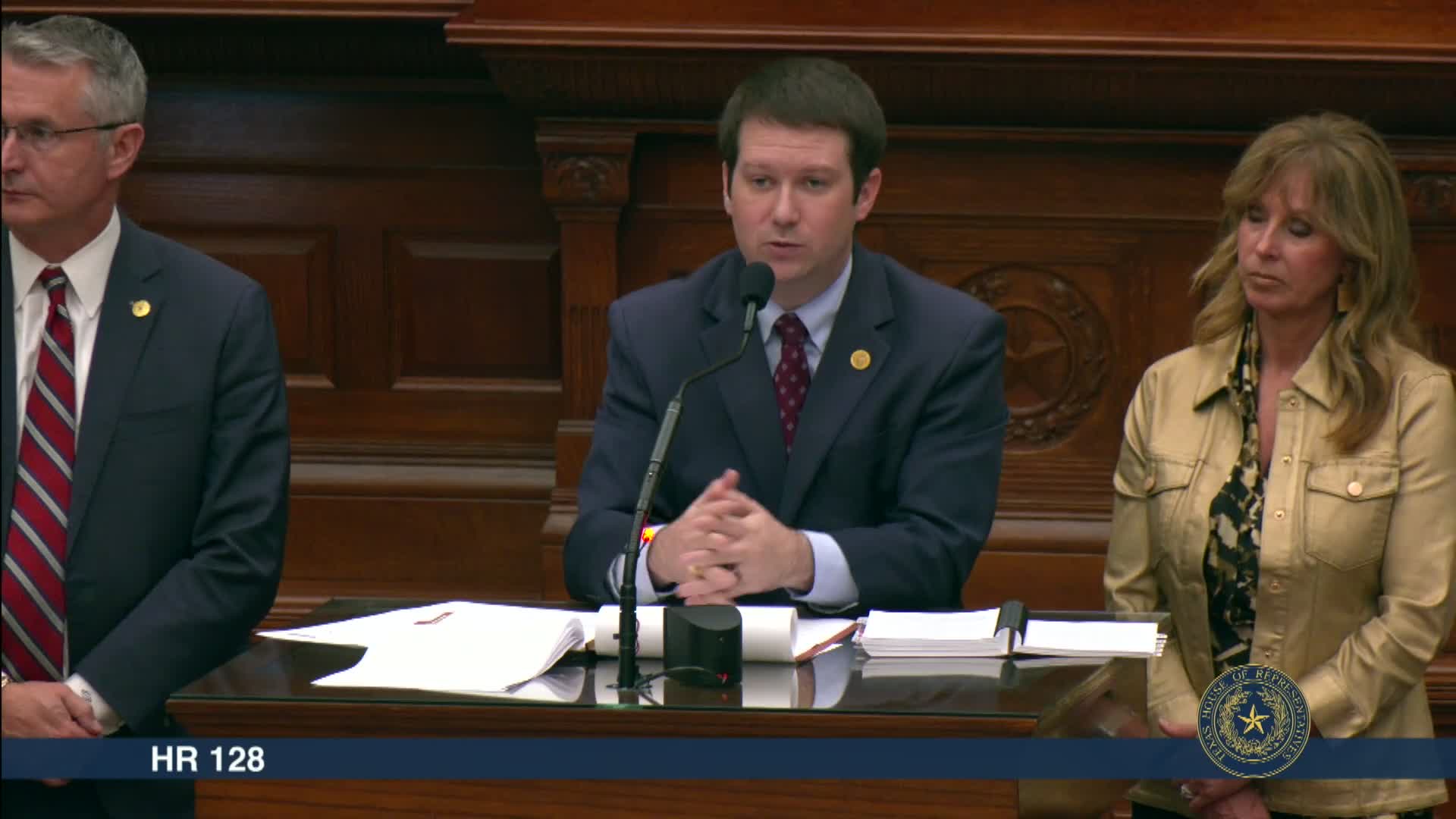
Summary
The House approved House Resolution 128 to add and clarify punishments for members who are absent without leave with intent to impede the House, including fines tied to per diem, loss of operating budget, loss of chair/vice chair designations and seniority reductions. The vote was 80‑28 after extended debate.
The Texas House adopted House Resolution 128 on Aug. 31, a rules change that increases and clarifies penalties for members who are absent without leave for the purpose of impeding the House’s work. The measure passed on a recorded vote, 80‑28.
Representative Vasut, the resolution’s author, said the change is meant to deter future quorum denials and to make clear the range of penalties available to the chamber. “We increase the existing fine … to three times the per diem,” Vasut said in his floor explanation, describing new options that include loss of the pro‑rata portion of a member’s monthly operating budget for days gone without leave, removal from chair or vice‑chair designations after two consecutive days absent, and loss of one session’s seniority for three consecutive days absent during a call unless excused by the House.
The measure also clarifies that the list of penalties is not exclusive and preserves the House’s plenary constitutional authority under Article 3 to impose other sanctions. The rules language retains due‑process steps, including appeal to the Committee on House Administration.
Opponents argued the changes weaponize House rules against political dissent and disproportionately punish minority or dissenting members. “This resolution cloaked in procedural language introduces punitive and coercive measures against duly elected legislators,” Representative Garcia Hernandez said. Several members cited the use of quorum denials historically as a constitutional tool and urged rejection of what they described as punitive new sanctions.
Representative Vasut’s amendment to clarify the House’s retained constitutional authority was adopted by voice vote; a contested Hopper amendment was ruled not germane and withdrawn after a point of order. After extended debate and a test of strict enforcement, the House approved HR 128, 80‑28. The rules change takes effect immediately for the duration of the session.