
Shasta supervisors order deeper review of county advisory bodies; public pushes to revive elections commission
Get AI-powered insights, summaries, and transcripts
Subscribe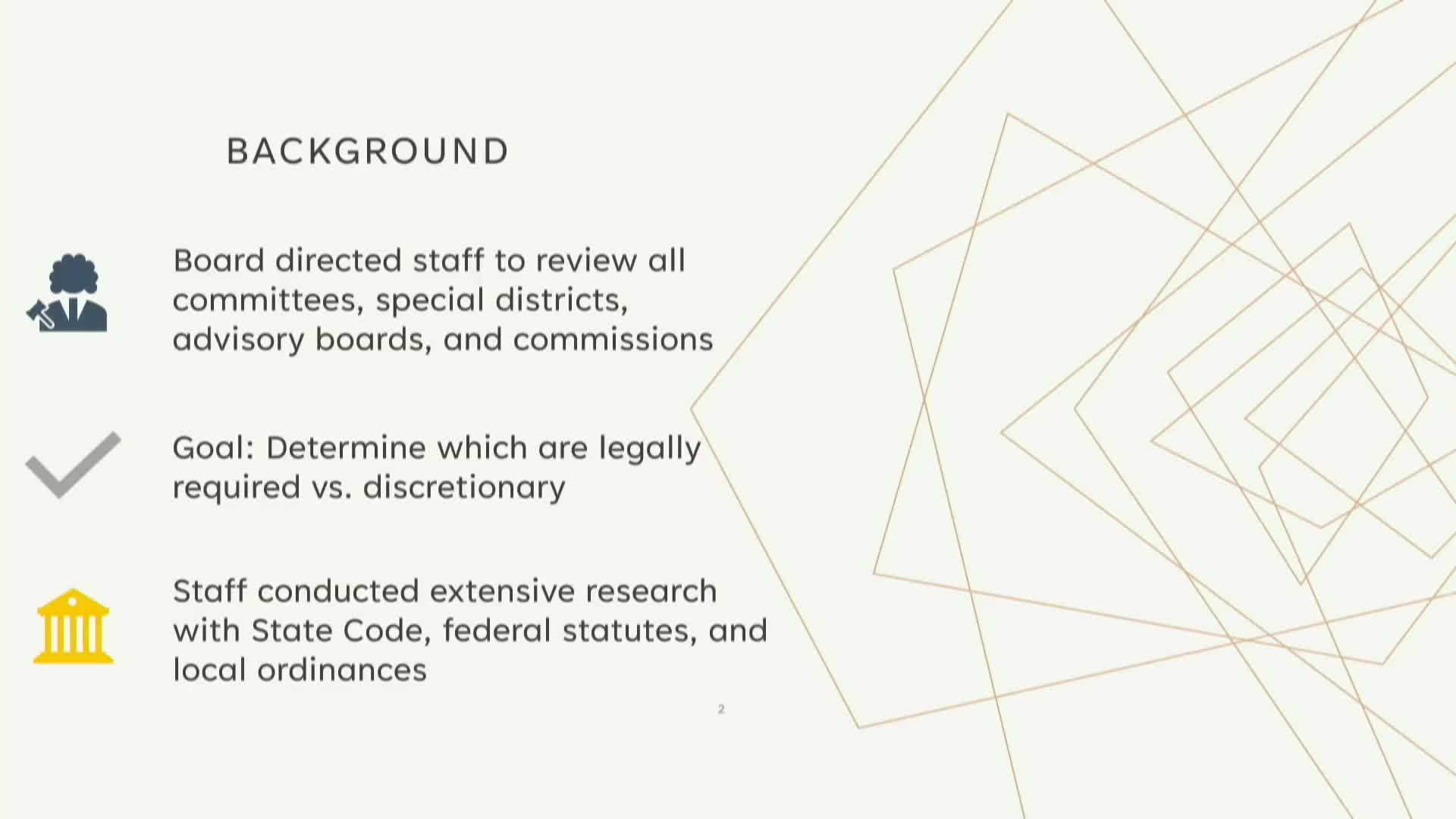
Summary
After a staff review showing more than 80 boards and commissions, the Shasta County Board of Supervisors asked staff to return with more detail on the Commission on Aging and on two historically discretionary boards, while public commenters urged reinstating an active Elections Commission.
Stephanie Blankenship, chief deputy clerk of the board, told the Shasta County Board of Supervisors on Oct. 7 that the county manages “more than 80 boards and commissions in total, including 30 that are required or mandated.” The presentation led the board to direct staff to return with follow-up information about the Commission on Aging and two discretionary bodies and prompted dozens of public comments urging the board to reactivate its Elections Commission.
The board’s action followed a staff review that classified boards as required, obligated (tied to agreements), discretionary or optional. Blankenship said the review included “extensive research into state code, federal statutes, and local ordinances” and noted some advisory bodies carry eligibility or technical requirements that support grant programs or regulatory functions.
Supervisor Matt Plummer moved to bring back an item for board consideration to direct the Commission on Aging to engage in work “within their scope”; the motion passed unanimously. The board also directed staff to return with information on whether to retain the Historical Heritage Commission and the Remote Access Network board; that motion also passed unanimously. Blankenship told the board that the Historical Heritage Commission has been inactive and that the county is not currently receiving the federal preservation funding that can flow through a certified local government program.
The meeting included repeated public pleas to resume the Elections Commission, created in 2023 under county code chapter 2.07. Commissioners and members of the public said the commission’s ad hoc work and recommendations provide oversight and public confidence in run elections. Margaret Hanson, a member of the commission, told the board she had “conducted myself with due diligence” and asked that the commission be allowed to continue its work; other speakers, including former commission chair Ronin Lan, said the body should remain standing while questions about election practices are resolved.
Board members stressed the difference between advisory bodies that receive or require funding and those that are strictly advisory. Supervisor Jesse Long noted that many advisory groups have no direct general-fund budget and cautioned that funding one commission could create precedent that others request appropriations. Plummer and other supervisors said they had discussed possible collaboration between the local Commission on Aging and the regional Planning and Service Area (PSA 2) to identify practical ways to support seniors without establishing a new county-funded program.
Blankenship said dissolving some obligated boards would require negotiating with partner entities or changing county code and that doing so could remove the county’s seat at regional tables for matters such as groundwater planning or economic development. She also said certain review bodies — for example, the Assessment Appeals Board — are composed of members who must meet experience requirements to adjudicate specialized matters.
The board did not dissolve any bodies on Oct. 7. Instead it voted to: (1) direct staff to return with options for assigning work to the Commission on Aging and how that could coordinate with PSA 2; and (2) return with research on the Historical Heritage Commission and the Remote Access Network board for a future decision. Public commenters continued to press the board to resume regular meetings of the Elections Commission and to implement the commission’s recommendations.
Why this matters: The board’s decisions determine which volunteer advisory panels remain active, the county’s ability to access state and federal grant programs, and where expert review is handled by specialized panels versus the board itself. The Elections Commission discussion also feeds into a broader public debate in Shasta County about election operations and transparency.
The clerk’s office will return to the board with the requested follow-up reports and cost/funding information, a timeline supervisors asked to see before any formal restructuring of committees is undertaken.