
Department adopts building‑on‑slopes tactics after challenging Crestline fire; code changes not decided
Get AI-powered insights, summaries, and transcripts
Subscribe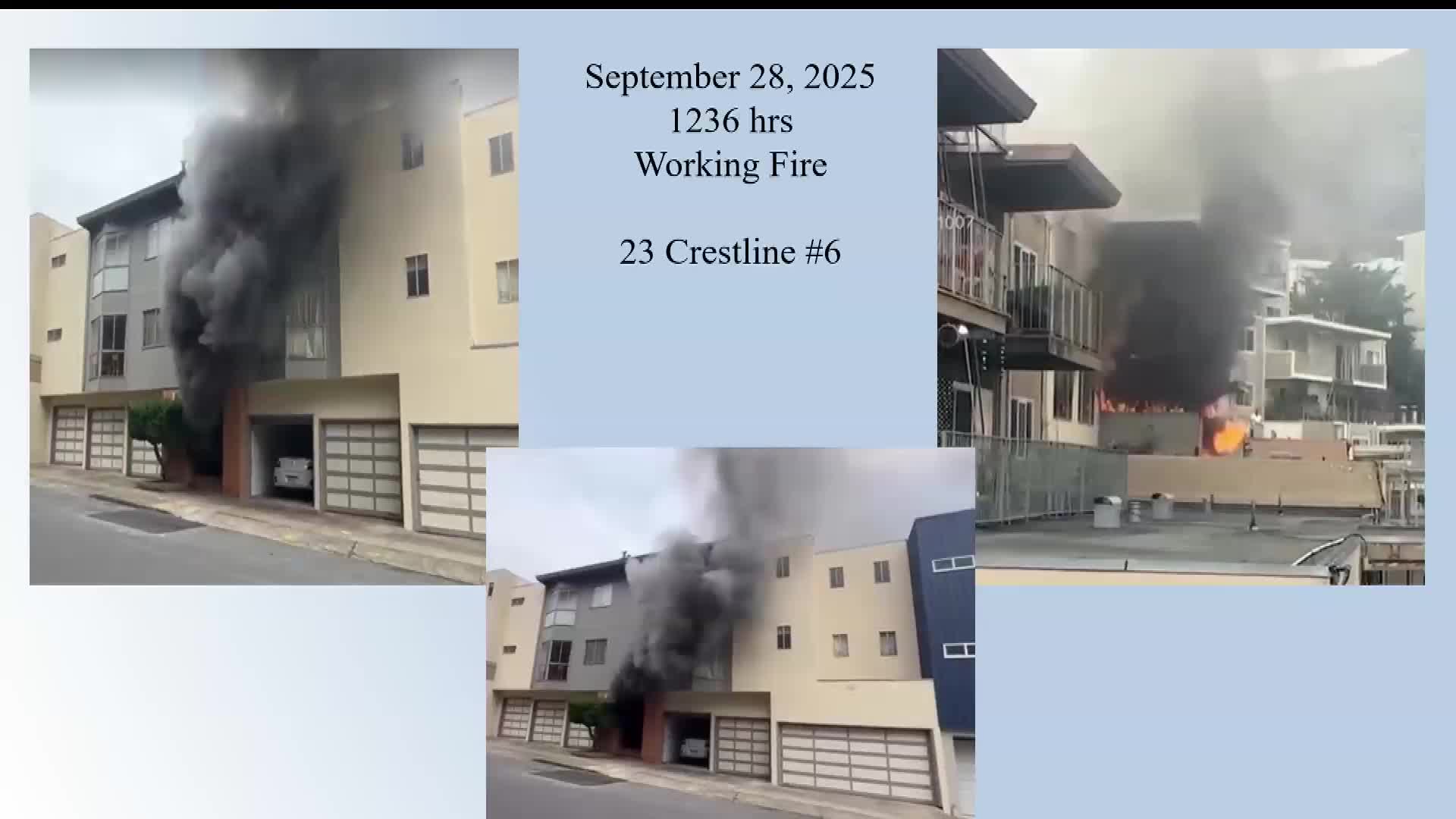
Summary
Operations leaders described a new ‘building on slopes’ policy intended to standardize tactics for downslope and below‑grade fires after a difficult single‑alarm fire at 23 Crestline; commissioners discussed whether findings could inform future code changes but no code amendments were proposed.
Deputy Chief Patrick Rabot told the Fire Commission on Oct. 8 that the department has issued a new policy standardizing tactics for fires in buildings on slopes after the department’s response to a challenging incident at 23 Crestline on Twin Peaks.
Rabot described the Crestline incident as a three‑above‑ground, four‑below‑grade structure that presented difficult access and flow‑path risks. He said the department’s new ‘‘building on slopes’’ policy uses common terminology for above‑ and below‑grade levels, reviews fire behavior and flow path science, and mandates a single coordinated plan for incident commanders confronting below‑grade fires. “This policy … enables them to have one and only one plan when encountering below‑grade fires in these downslope buildings,” Rabot said.
Why it matters: The department identified past line‑of‑duty fatalities and serious injuries in similar structures and said consistent tactics and preplanning can reduce risk. Rabot pointed to past incidents from 1995 and 2011 as part of the rationale for formalizing guidance.
Tactical elements and training Rabot said the policy emphasizes careful coordination of vertical and horizontal ventilation, prohibits independent ventilation or forcible entry action by individual members without coordination, and asks companies to survey first‑alarm areas to identify slope buildings and review preplans. He also said field training and updated preplans will be used to prepare companies for these incidents.
Code change discussion Commissioners asked whether the department’s experience could lead to building‑code changes for new construction on slopes. Rabot responded that the policy is tactical rather than codemaking, and that some mitigation (for example sprinkler requirements) is already tied to building size and occupancy; he said he would coordinate with the fire marshal to consider any future proposals to the building code, but no code changes were proposed at the meeting.
Ending Rabot asked companies to review the new policy and identify buildings on slopes in their first‑alarm areas so crews are prepared; commissioners requested follow‑up if work on code changes or further mitigation is pursued.