Tennessee ELA panel approves wording changes for speech and communication electives
Get AI-powered insights, summaries, and transcripts
Subscribe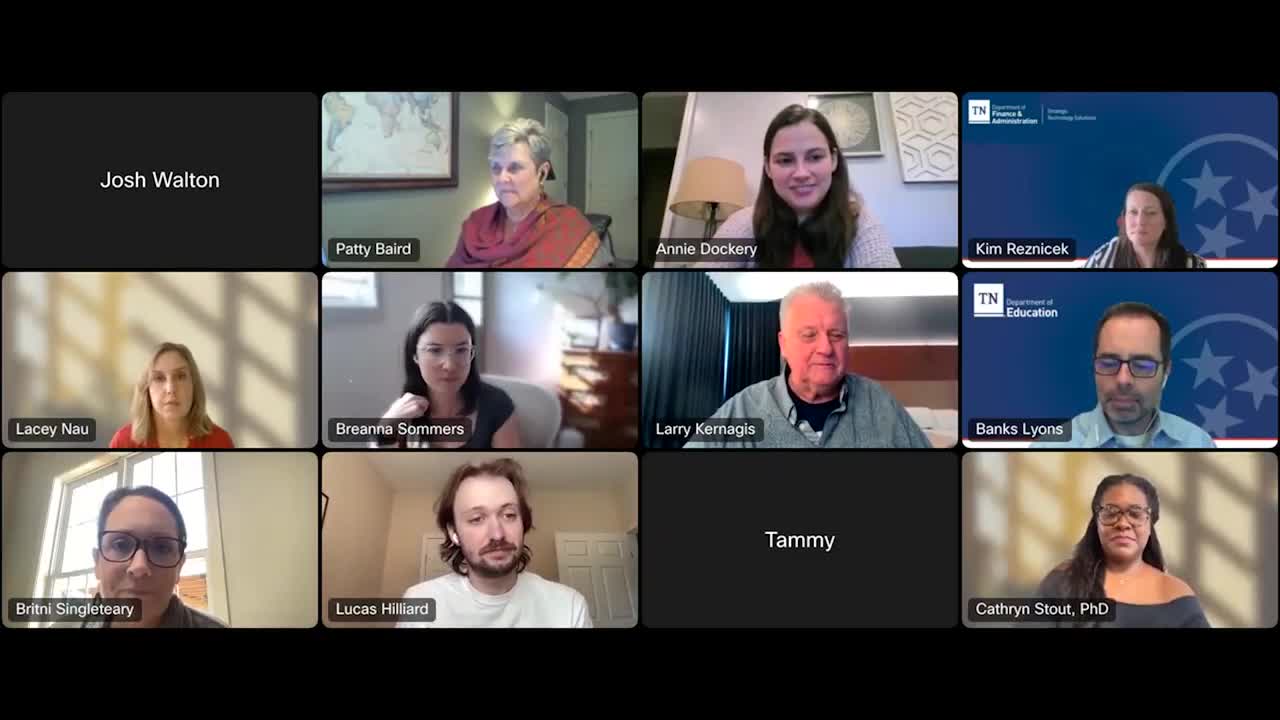
Summary
A Tennessee State Board of Education committee approved wording changes to elective speech and communication standards — including substituting 'perspective' for 'point of view' and specifying use of digital tools — by consensus during a virtual Oct. 2025 meeting; the committee formally recorded the meeting as the minutes by roll-call vote.
The Tennessee State Board of Education's English Language Arts Standards Recommendation Committee (SRC) approved wording changes to elective speech and communication standards during a virtual meeting in October 2025.
The committee, meeting electronically because a fiscal quorum could not assemble in Nashville, recorded the meeting and voted to accept the recording as the minutes, a motion the committee approved by roll call with six aye votes and no nos. The committee then reviewed elective standards in speech and communications and adopted multiple wording edits by unanimous consent or “hearing no objections.”
The panel moved through Speech and Communication (S C) standards 6–11, agreeing to small but substantive edits intended to clarify expectations for instruction. Vice Chair Hilliard read the standards during the meeting: “adapt speech to a variety of contexts and tasks demonstrating command of academic English when indicated or appropriate,” and led discussion on whether elective language should mirror the core speaking-and-listening standards. The group decided electives need not be identical to core standards but should be clear and distinct for elective contexts.
Committee members changed a line reading “evaluate a speaker's point of view, reasoning, and use of evidence and rhetoric” to substitute perspective for “point of view,” saying the term is clearer in an elective context. On technology, the committee replaced broader phrasing with “use digital tools strategically to find and evaluate information, connect and collaborate with others, and produce and share content.” Members also settled on the simpler phrasing “demonstrate digital citizenship” for the standard addressing online behavior and norms.
Most edits were approved by the committee through informal consensus — the chair or vice chair solicited objections and, when none were voiced, accepted the revised wording. The only formal roll-call vote recorded on the transcript was on the procedural motion to accept the meeting recording as the official minutes; substantive edits were handled as committee approvals without separate recorded roll-call votes.
The committee discussed implementation details, such as whether supporting guidance for electives would be included in the main standards guide or developed locally. Staff said electives have traditionally been implemented by local education agencies and that supporting language for electives would be looked at after the committee finished the standards wording. Committee members asked staff to collect any glossary items (for example, a definition of “digital citizenship”) in a “parking garage” list for later work.
The committee did not adopt any new policy or make changes to statute; it recommended revised elective standards language for consideration by the full board process. Next steps discussed included finalizing elective wording, compiling glossary entries, and confirming future meeting availability to finish any remaining edits.
Details from the session are included below for educators and district staff planning course development.